





SAVE $1,750
Nordic Wave Flash Sale





To say that sauna bathing is a “new thing” would be comical, at the very least. The first recorded instances of sauna use date all the way back to the Stone Age (around 7,000 - 5,000 B.C.). Yeah, that’s quite a while ago - a lot has happened in those thousands of years, and sauna benefits are much clearer these days than they were back then.
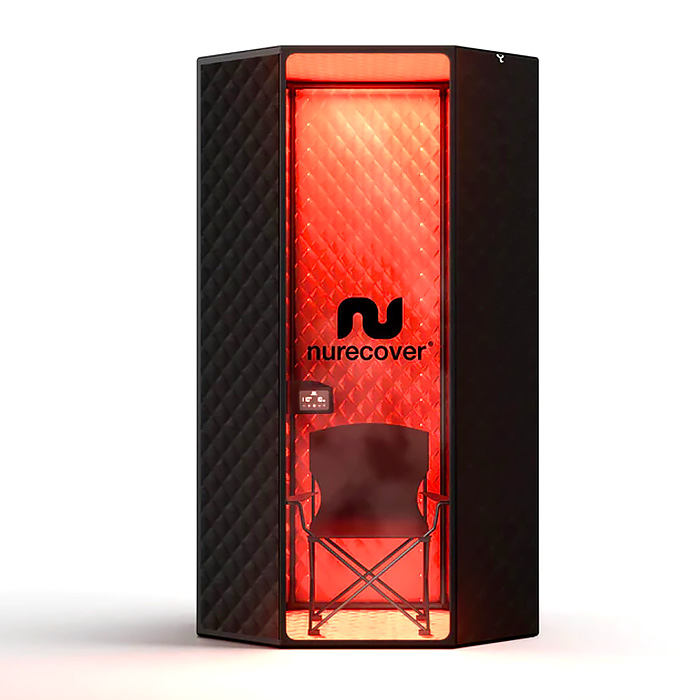
I bet you’ve noticed how trendy saunas have become in the past decade or so. Same as with many other types of products, this is mainly due to the fact that saunas are very easily available these days. Just look at brands like Nurecover - it’s incredible what they’ve managed to achieve!
Portable, effective, compact-sized, and high-tech-based saunas - all for less than many of us spend on our monthly groceries. It’s no wonder the longevity space has become so knowledgeable about the benefits of sauna use!
In this article, we’ll talk about just that. I’ve wondered about how I could make this more fun to read and easier to digest, and I’ve come up with an interesting idea. We’ll talk a bit about sauna health benefits, in general, and then distill facts from popular fiction later on.
In the introduction of this article, I mentioned that sauna use has been a thing since essentially the Stone Age. Obviously, while there was no “scientific research” done on sauna benefits back then, people still associated sauna use with some positive outcomes, general and mental health-wise.
Some of the earliest saunas in Finland were essentially pits dug into the earth. People lined them with stones, heated them with fire, and poured water on them to create steam.
Nowadays, we’re much better-informed about the effects sauna bathing can have on our health and general well-being. Even so, this topic is still mildly controversial - there are disagreements on some of the more niche sauna benefits.
We won’t get into the fringe topics, though. Instead, let’s talk facts - I’ll cover the perks of sauna use in all the major categories you might usually find referenced online, and provide scientific research to back each claim up. Data, facts, and heaps of research - not biased opinions and headline-worthy takes.
We’re starting out strong, huh?
Some of the biggest hot sauna benefits are associated with your heart. So much so, that semi-frequent sauna use (3 - 6 times per week) is linked to an up to 60% decrease in risk of fatal heart disease and sudden cardiac arrest[1].
Bold claim, sure - here’s the science behind it.

When you’re using a hot sauna (keyword “hot” - cold saunas work a bit differently), your body’s core temperature rises, and you start sweating. As your body tries to cool itself down, this increases your heart rate.
Ideally, your heart reaches 100-150 beats per minute (BPM)[2] while you’re in a hot sauna. Anything above is considered abnormal and should be discussed with your physician.
An increased heart rate results in your blood vessels opening up, which means better blood circulation. This has a whole set of benefits, one of which is reduced risk of blood clot formation, and thus - cardiac arrest[3].

But Mr. Longeviter, I have an irregular heartbeat, and have heard that I should stay clear of saunas and excessive heat - doesn’t that contradict what you’re saying?
I hear you. In fact, I relate to that, personally - I have arrhythmia, and with all of the sauna testing that me and the team have been doing, I’ve visited my family doc for consultation more times than I can count. Here’s the truth of the matter: while the above-mentioned sauna benefits are long-term, there’s no guarantee on how your heart / body might react in the short-term.
Most of the benefits of using a sauna are associated with long-term use - I’m talking years. People with heart-related issues are usually discouraged from using saunas due to the fact that they:
… rapidly! That’s the kicker here - all of those things happen rapidly, while you’re using the sauna. For example, even though one of the benefits of sauna use is a decrease in blood pressure[4], while you’re sitting in there and sweating your mind off, your blood pressure rises.
And, when you combine all of those stressors into one place, they can have adverse effects on anyone dealing with irregular heartbeats or other heart-related issues.
If you’re experiencing heart-related issues, it is absolutely CRUCIAL that you discuss the potential sauna benefits and disadvantages with your physician before embarking on your heat therapy journey.
All of that does not discredit what the research is saying, though - for most healthy adults, some of the biggest sauna benefits are associated with their heart function[5].

Sticking with the topic of heart-related benefits, I want to re-emphasize - sauna use has been shown to decrease blood pressure[6] in the long run, as well as lower the cholesterol levels in your blood[7].
Now, it's worth pointing out that saunas (as standalone products) won’t work any major miracles on either of those, but if you combine heat therapy with physical exercise, studies suggest the aforementioned positive effects become amplified[8].
Speaking of physical exercises, another point for what is a sauna good for has to do with your muscles.
One of the above-discussed sauna benefits is increased blood flow, thanks to a process called “vasodilation” - in simple terms, widened blood vessels. I’ve told you about the heart-related benefits that this has, but the story doesn’t end there.
Scientific research has linked sauna use with better muscle recovery post-physical exercise[9]. Your muscles recover faster, and they’re not as sore during the recovery period.

The actual science behind this is rather intuitive, as well. With your blood vessels becoming wider while you’re in a sauna, they are able to carry more oxygen to your muscles, all throughout the body. More oxygen equals a faster / smoother recovery process.
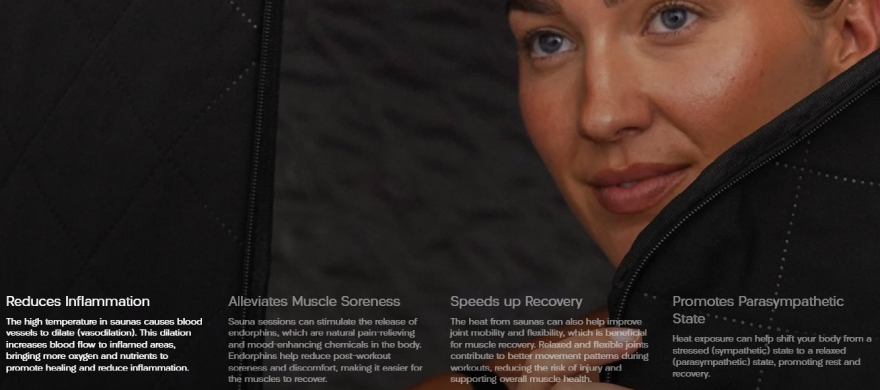
On top of that, the high heat helps relax your muscles, and works as a natural tension reduction / anti-inflammatory agent[10].
Sauna use is associated with boosting heat shock protein release in the body[11] and more efficient flushing out of waste (such as lactic acid).
In addition to all of that, heat therapy has been shown to improve the mechanical properties of your body’s connective tissue[12]. What happens is that the collagen fibers in the body become more extensive (relaxed) when the body is subjected to high temperatures.
This is something that’s very important to anyone who does active sports or is a professional athlete. It results in reduced body stiffness and can be useful in lowering the chance of injury during stretching.

In short, if you’re researching sauna benefits because you heard that heat therapy is good for athletes, in a general sense, yes - saunas can be very useful for both professionals, as well as amateurs alike.
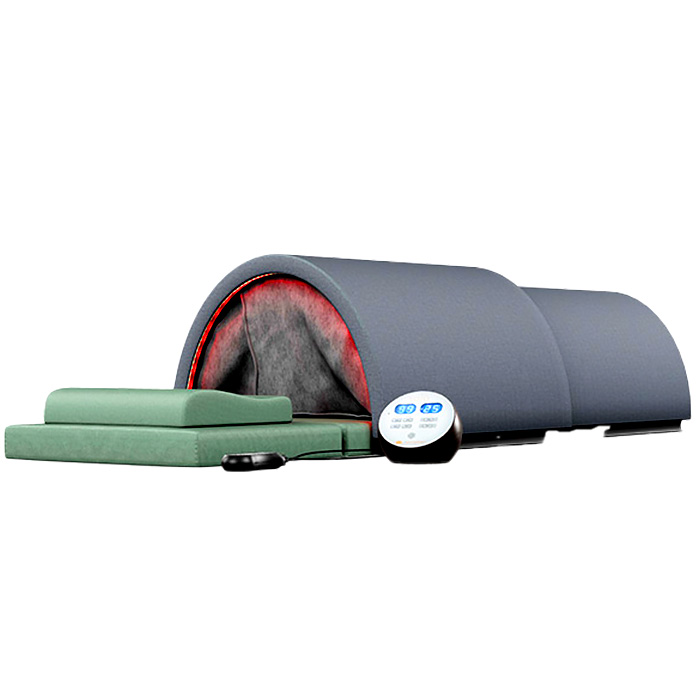
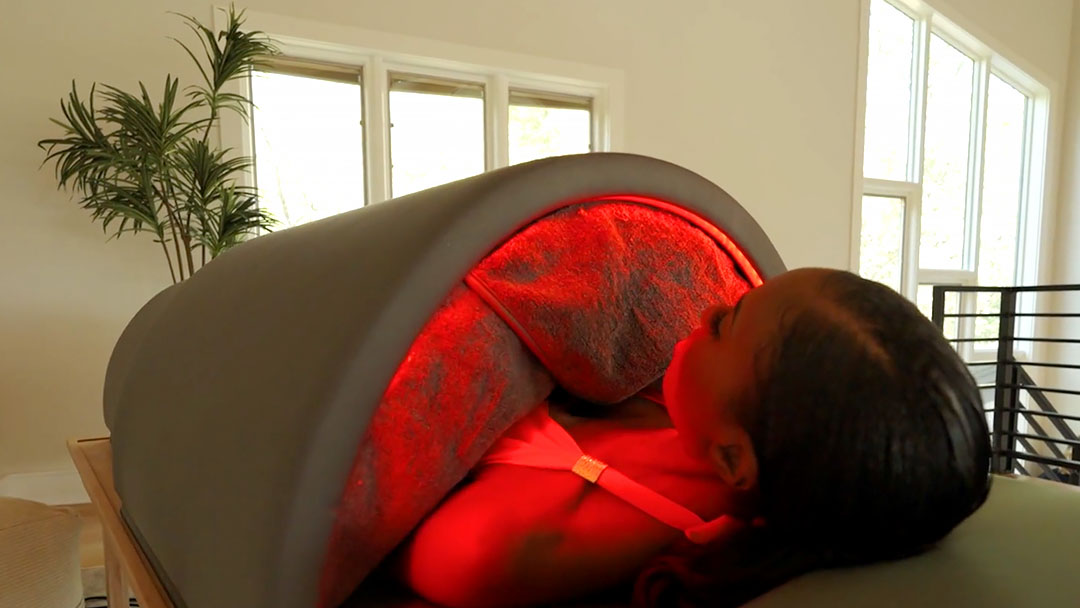
If you’re looking for a sauna right now, check out Nurecover’s or Sunlighten’s product lines. The former is a very affordable red light / wet heat sauna provider, while the latter specializes in infrared saunas.

Up to this point, we’ve talked about the physical sauna benefits. However, the effects that sauna bathing has on one’s mental health have been studied quite extensively, as well - let’s talk about it.
One of the biggest related topics discussed among sauna users has to do with cortisol. It’s the stress hormone - when your cortisol is high, you feel stressed. An elevated cortisol level can lead to chronic stress - something that all too many people are familiar with in the modern world.
During a sauna session, your cortisol spikes for a brief period (due to the stress that the high level of heat causes), and then stabilizes afterwards. Studies show that, with consistent sauna use, your baseline cortisol level might be lowered, leading to a decrease in stress in the long run[13].
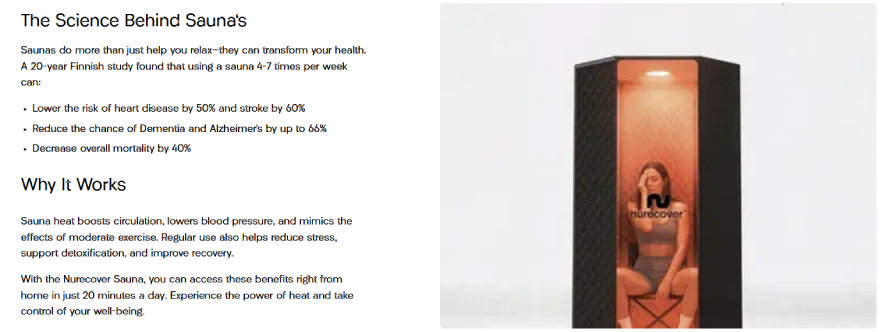
During a sauna session, your body also releases mood-enhancing neurochemicals and activates the so-called “parasympathetic mode” in your nervous system[14]. Think of it as a type of “rest & recovery” phase - one of the benefits of sauna use is that saunas help your body shift into this mode, even if you’re otherwise stressed and overwhelmed.
All of the above is fact-driven - scientific studies that focus on measuring the mental health benefits of sauna use over extended periods of time. However, there’s also a more subjective side to this - how sauna users actually *feel* during and after a session.
There’s science referencing this, as well. Observational studies show that people who participate in regular sauna bathing report higher overall happiness levels[15].
By this point in the article, we’ve established some of the biggest, most notable sauna benefits. If you were simply curious about what does a sauna do for your health, be it physical, mental, or both, I hope the research I’ve presented answered your questions.
Now, let’s have a little fun with it, shall we?
There are plenty of myths and misconceptions surrounding sauna benefits and their use cases. Let’s dispel some of the more common fictitious claims, and replace them with the truth.
Myth: Sauna bathing “detoxes” your body by removing toxins via sweat.
Myth: Sauna bathing burns a lot of calories.

Myth: Saunas are dangerous for your heart.
Myth: Saunas can replace physical exercise.
Myth: Using a sauna can heal illnesses (i.e. a common cold, an infection, and similar).

Myth: Saunas remove alcohol faster from your body.
Myth: More sauna sessions = better results.
So - those are some of the more popular myths surrounding sauna benefits and disadvantages. It was fun clearing them up - I hope you’ve learned something new, as well!
What it all essentially boils down to is common sense. If you’re planning on using a sauna, or are currently on a heat therapy regimen, focus on not overdoing it, and if something comes up, stop using the sauna and consult your doctor. For most people, saunas are an incredible addition to their wellness routine, assuming you understand what to expect beforehand.
Before I let you go, let’s go over a few tips & tricks I’ve picked up during my own sauna use sessions / researching this topic. While a lot of things are often pretty self-explanatory, it doesn’t hurt to get a refresher, in order to maximise those sauna benefits!
That’s kind of the starting point, isn’t it? You’re not going to feel any benefits of using a sauna if the product you’ve decided to use sucks, to put it plainly. If you’re on a budget, I highly recommend checking out Nurecover’s product line - if you have some more money to splurge, Sunlighten and Plunge offer some top-of-the-shelf sauna products.

A high-quality sauna will also ensure that you receive all (or at least - part) of the benefits we've discussed in this article. Less-than-stellar quality products can do more harm than good - a cheap, flimsy sauna will cause frustration, at the very least, and it might be built with health-impacting materials, at the very worst.
When you purchase a portable (or stationary) sauna product, a lot of the time, it’s going to come with a user manual. Read it, refer to it, and follow the instructions found within. Each sauna is different in how it works - so, if you want to maximise the potential health benefits of sauna bathing, it’s a good idea to follow the instructions carefully, and not assume that a product like the SaunaBox XL should be handled the same as something like the Sunlighten Solo.

Following the instructions is especially important if you're transitioning between sauna types - for example, you're used to a wet sauna, and now, you've just bought yourself a dry-heat product. Not only will the sauna benefits differ, but the two saunas are used rather differently, as well!
Using a sauna is half of the deal - the other half is maintaining it. Wet saunas are a bit trickier to maintain than infrared or dry heat ones, due to a lot of moisture being involved. Nonetheless, always clean your sauna thoroughly after each use, unless you want mold to start forming, eliminating any benefits of sauna use altogether.
Cleaning your sauna between every use isn't difficult, and should only take you a few minutes to do. The process is a bit different with stationary saunas, though, and might involve some rarer, albeit more complex maintenance.
Googling “10 benefits of saunas”, liking what you’ve read, and making saunas your whole personality can be fun, but it’s not the right approach. Combine sauna use with a proper diet, a cold plunge routine, and physical exercise to maximise the potential sauna health benefits. By itself, the sauna won’t perform any miracles.

Also, don't expect to see results after the first few sessions. Most benefits of using a sauna take time to show - if you stick with it, and are consistent, you should be good, though!
This is kind of the “ultimate” tip, honestly. No amount of research or scientific backing can dictate what your body feels and how it reacts to using a sauna. While some people might experience incredible sauna benefits, others could find that this type of product is definitely not for them (although that’s rare). Listen to your body, respect its boundaries, and enjoy the benefits of using a sauna properly!
If you came into this article questioning what is a sauna good for or what does a sauna do, I hope that, by this point, that’s all cleared up now.
There are plenty of sauna benefits to experience - actual, real, science-backed benefits that have been proven again and again. With the longevity space booming and more people coming into it every single day, there’s a lot of misinformation out there, as well.
That’s why it’s good to take a step back and look at the facts. That’s exactly what we did in this article!
I’ve experienced a lot of the benefits of sauna bathing firsthand - that’s why I continue to use these products to this day. Saunas have been the thing that brought me into the longevity space, in the first place - I hope that, if you decide to try them out, they’ll serve you well, too!
Don’t forget - if you’re looking for a reliable sauna product, you should check out Nurecover and Sunlighten - two leading brands in the space, with fantastic product selections to choose from!

 Verified
Some of the biggest proven sauna benefits include stress reduction, muscle relaxation, blood pressure reduction, and improved heart functioning. All of these benefits are associated with long-term sauna use - so, if you were to purchase a sauna, use it a couple of times, and expect to see tangible results, that’s likely not going to happen.
Yes, many of the health benefits of sauna use are associated with cardiovascular health. Heat therapy widens your blood vessels, which in turn lowers the risk of cardiac arrest and other heart-related issues. However, if you’re currently dealing with a heart ailment of some kind, be sure to consult your physician before starting to use a sauna.
Saunas and weight loss are mostly a myth. The weight lost during a sauna session is mostly water - sauna bathing can help you lose weight, in the long run, but it must be combined with adequate physical exercise and a proper diet.
Always use a sauna after physical exercise. The effects of heat therapy will help your muscles recover faster and lower any soreness you might feel after an intense workout.
Both wet and dry saunas have their strengths and weaknesses, so at the end of the day, it’s really a matter of preference. If you lean more towards a wet sauna, Nurecover’s got you covered on that front. If you’re a dry sauna type of person, check out Sunlighten - their product line is tough to beat.
In a general sense, yes - a lot of the health benefits of sauna use have been studied thoroughly, and proven time and time again to be true. However, each person is different, and while some might experience only the positive aspects of sauna-related heat therapy, others might not react to it as well. Listen to your body, and make adjustments accordingly!
Join 60,000+ longevity biohackers and get our 5-min weekly read with the latest findings, research-backed protocols and tips to boost your daily habbits!
Searching for results...
Please wait while we find the resultsNo results found for ""
Try searching for a different termSomething went wrong
Please try again later