









APP 50% OFF
Get Exclusive Discount




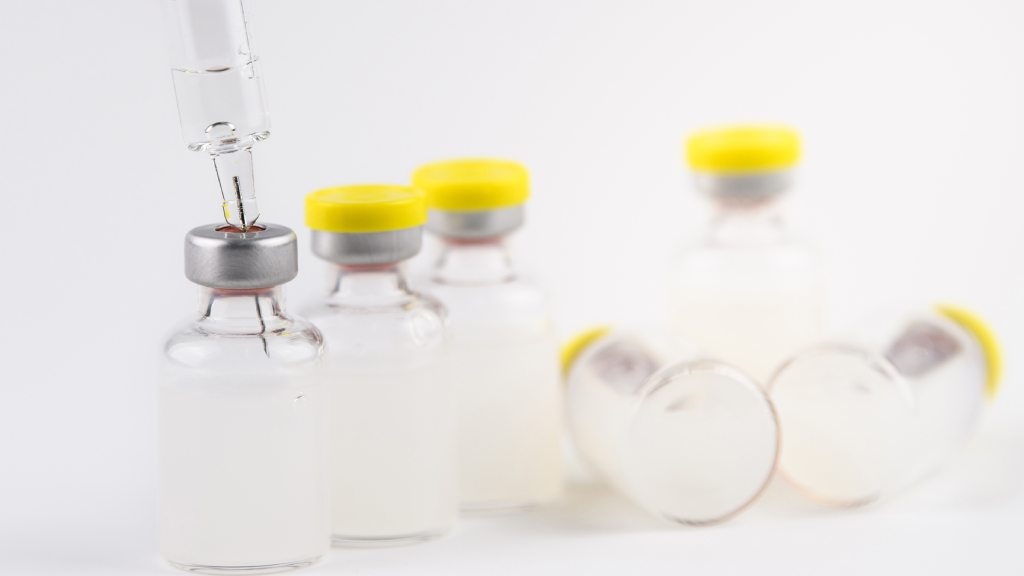
Peptide trackers have gotten a lot better in the last few years. What started out as simple reminders for injections has now grown into full-blown platforms where users can track, monitor, manage, and organize seemingly everything related to peptides - and more. Naturally, with the many apps available, you might find yourself looking for a peptide tracker comparison!
Some platforms are for GLP-1 users, while others might be better for advanced peptide stacks, inventory management, or overall wellness tracking. The best app for one person may be entirely wrong for another - if you’re keen to pick, I have an article looking over the top options.
In this peptide tracker comparison, however, we’ll take a more generalized look at 10 of the most popular apps and the various features associated with them. I’ve tested each app myself, and will splice in some publicly available data & user feedback to help you get a balanced picture.
Note that MAX Peptide AI is the most comprehensive peptide tracker app, in general, and has arguably the widest range of features currently available, for peptide users and longevity enthusiasts alike.
As far as this peptide tracker app comparison is concerned, different apps are frankly designed for different users. Some trackers only log injections and reminders, while others can provide a one-stop shop for protocol management, body composition tracking, and general health optimization.
Take a look at the table below - it’s a good starting point for our analysis, as it offers a high-level comparison of the 10 peptide tracker apps featured in this guide:
| Platforms | Custom Protocols | Reminders | Inventory Tools | AI Features | Free Version / Trial | |
|---|---|---|---|---|---|---|
| MAX Peptide AI | iOS & Android | ✅ | ✅ | ✅ | ✅ ✅ | ✅ |
| Pep AI | iOS & Android | ✅ | ✅ | ✅ ✅ | ✅ | ✅ |
| Regimen | iOS & Android | ✅ | ✅ ✅ | ✅ | Limited | ✅ |
| SHOTLOG | iOS & Android | ✅ | ✅ | ✅ ✅ | Limited | ✅ |
| PeptideKit | iOS | ✅ | ✅ | ✅ | Limited | ✅ |
| Shotsy | iOS & Android | Limited | ✅ ✅ | Limited | Limited | ✅ |
| PeptIQ | iOS & Android | ✅ | ✅ | Limited | ✅ | ✅ |
| MeAgain | iOS & Android | Limited | ✅ | Limited | Limited | ✅ |
| Injectly | iOS | Basic | ✅ | Limited | ❌ | ✅ |
| PepTracker | iOS | Basic | ✅ | ❌ | ❌ | ✅ |
Here’s the logic:
Looking at the table, you can kind of see that there are very few apps that would be a one-size-fits-all “best” solution for all use cases. The features that users need will vary greatly depending on their goals.
Someone who just needs reminders for weekly GLP-1 injections will have very different needs than someone who is managing multiple compounds, tracking changes in body composition, or monitoring long-term health markers.
One clear trend I myself have noticed while testing: apps are competing more and more on ecosystem depth, not just on simple dose logging functionality. Injection reminders and dosage history are now standard and expected features. The difference between apps is the degree to which they connect peptide use to broader health data, adherence, and progress tracking.
The above peptide tracker comparison chart also highlights an emerging divide between general health trackers and dedicated peptide management tools. But, I think you’ll notice that more clearly as we progress through the comparison.
For this peptide tracker app comparison, I assessed each platform using a mix of hands-on testing, publicly available information, app store listings, user feedback, and developer documentation. I did my best to double-check all of the features and prices of each app, but some of them are less than clear in these regards - just a quick disclaimer.
Admittedly, not all features we’ll talk about are equally important. I prioritized the core peptide-related functionality, such as protocol tracking, reminders, and inventory management, more than secondary features like AI or integrations - but we’ll talk about those, as well.
Research shows that health-related apps can improve engagement and adherence if they have tracking, reminders, and self-monitoring features[1]. That’s why these (and similar) features are at the forefront of this article, as well.
The purpose of this peptide tracker comparison is not necessarily to select a single, universal winner - again, I have another article doing just that. Instead, here, I want to give you enough context to determine which platform suits your own goals best, whether that be simple injection logging or managing a complex peptide stack.
Capiche? Good, let’s get started with the comparison proper, then.
All peptide tracker apps are designed with the same goal in mind: to help you stay organized and consistent. The difference is the flexibility each platform has once you get past the basic injection logging.
Some users just need to record a weekly GLP-1 dose. Others may be managing multiple compounds at the same time, rotating injection sites, changing dosages, or following more complicated and evolving protocols. In such cases, the quality of the protocol management is as important as the reminder system itself.
That’s the first big place where we start seeing some differences in the peptide tracker comparison, as well:
| Custom Peptides | Multi-Peptide Support | Injection Site Tracking | Dose History | Unit Support (mg/mcg/IU) | Peptide Calculator | |
|---|---|---|---|---|---|---|
| MAX Peptide AI | ✅ | ✅ | ✅ | ✅ | ✅ | ✅ |
| Pep AI | ✅ | ✅ | Limited | ✅ | ✅ | ✅ |
| Regimen | ✅ | ✅ | Limited | ✅ | ✅ | ✅ |
| SHOTLOG | ✅ | ✅ | ✅ | ✅ | ✅ | ✅ |
| PeptideKit | ✅ | ✅ | Limited | ✅ | ✅ | ✅ |
| Shotsy | Limited | Limited | ❌ | ✅ | Limited | ❌ |
| PeptIQ | ✅ | Limited | ❌ | ✅ | Limited | Limited |
| MeAgain | Limited | ❌ | ❌ | ✅ | Limited | ❌ |
| Injectly | Basic | ❌ | ❌ | ✅ | Limited | ❌ |
| PepTracker | Basic | ❌ | ❌ | ✅ | Limited | ❌ |
One interesting thing that I noticed is that many apps claim to support peptides, but not all are created for peptide users. Notice the distinction?
There are a few projects that launched in the GLP-1 space, like Shotsy and MeAgain. They work well for people on drugs such as semaglutide or tirzepatide, but can be limiting when dealing with multiple different compounds at once. Stack management and custom protocols or peptide calculators are often limited or missing.
Apps like MAX Peptide AI, Pep AI, SHOTLOG, and Regimen, on the other hand, take a more thorough approach. They assume users are running multiple compounds at a time and need tools to organize schedules, track progress, and maintain consistency over long periods.
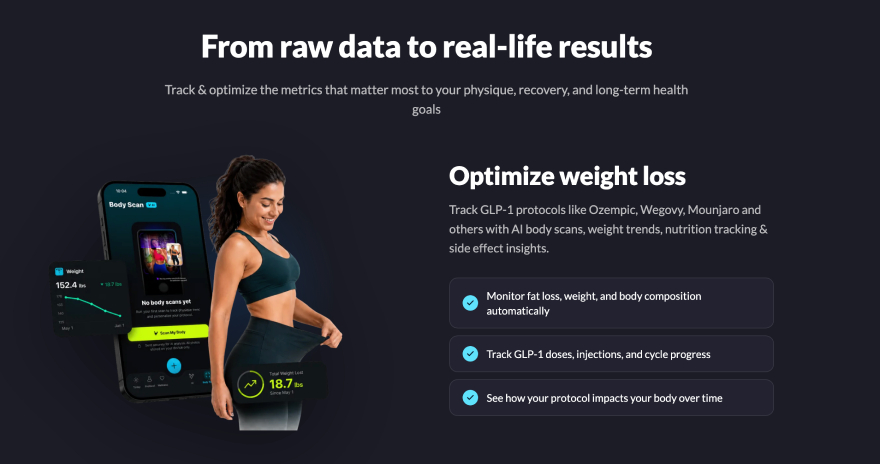
MAX Peptide AI has one of the most extensive protocol systems of the lot. Injection logging and protocol management can be done in the same ecosystem as body composition, nutrition, training, and other health metric tracking. This reduces the need to switch between multiple different apps, which is a common pain point for more experienced users.
Pep AI is also alright in this category, especially for protocol organization. Its inventory tools and peptide calculators are great for users who like to track things in a structured, data-driven way. Meanwhile, apps like Regimen are focused more on adherence and scheduling, and are trying to be more of a replacement for spreadsheets or other manual tracking methods.
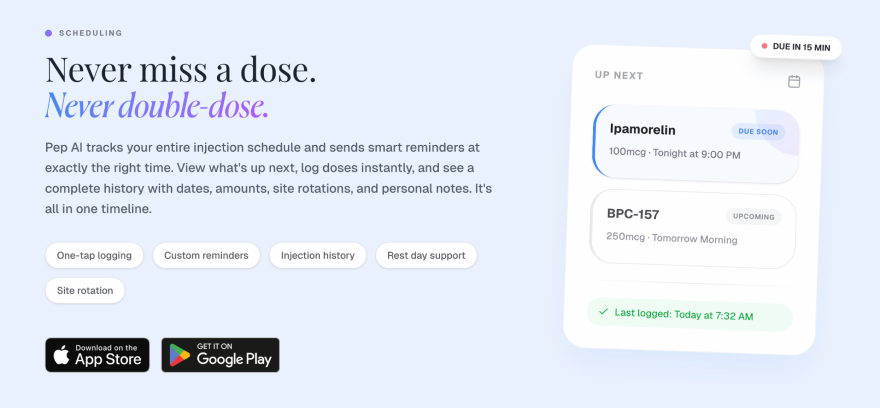
Another notable feature is the tracking of injection sites. Although often overlooked, changing these sites is a widely recommended practice for injection-based therapies to reduce irritation and improve comfort over time[2]. Good injection technique and rotating the site have long been identified in research as important components of long-term treatment adherence.
As your protocols become more complex, it’s more common to miss a dose, forget when a vial was opened, or lose track of an injection schedule.
This is why reminder systems pay for themselves (assuming the price is right). A well-designed reminder feature should be more than a push notification - rather, it should become a seamless part of a user’s routine.
| Injection Reminders | Custom Schedules | Recurring Doses | Missed Dose Logging | Calendar View | Health App Integration | |
|---|---|---|---|---|---|---|
| MAX Peptide AI | ✅ | ✅ | ✅ | ✅ | ✅ | ✅ |
| Pep AI | ✅ | ✅ | ✅ | Limited | Limited | Limited |
| Regimen | ✅ | ✅ | ✅ | ✅ | ✅ | ✅ |
| SHOTLOG | ✅ | ✅ | ✅ | Limited | ✅ | Limited |
| PeptideKit | ✅ | ✅ | ✅ | Limited | ✅ | Limited |
| Shotsy | ✅ | Limited | ✅ | ✅ | ✅ | ✅ |
| PeptIQ | ✅ | Limited | ✅ | Limited | Limited | Limited |
| MeAgain | ✅ | Limited | ✅ | Limited | Limited | Limited |
| Injectly | ✅ | Basic | ✅ | ❌ | Limited | Limited |
| PepTracker | ✅ | Basic | ✅ | ❌ | Limited | ❌ |
Apps like Regimen and MAX Peptide AI have done particularly well here. Their reminder systems aren’t just basic alerts - instead, they incorporate scheduling into a broader peptide tracking experience. Users can view historical data, track their metrics, and retain structure even as protocols become more complex.
Regimen is also a viable choice for users who prefer routine and habit-forming. Its design philosophy is to replace spreadsheets, notes apps, and other manual tracking systems with a dedicated workflow.
On the other end of the spectrum, apps like Shotsy, PepTracker, and Injectly deliberately keep things simple. That simplicity can be great for users who only need reminders and basic logging, though more advanced users may eventually outgrow those feature sets.
Missed dose management is one subtle but important consideration. The ability to log missed injections or change schedules without disrupting an entire protocol can make a big difference over the long haul.
Let’s continue the peptide tracker comparison by taking a look at how our contenders compare in regards to inventory management and reconstitution tools.
Unlike many “traditional” meds, many peptides need to be reconstituted before administration. A simple error in dilution or dose calculation can affect consistency and lead to inaccurate tracking. That is why inventory management tools have become one of the more valuable differentiators in peptide tracker comparisons.
Some apps do inventory as an afterthought, while others are built specifically around it:
| Vial Tracking | Remaining Dose Estimates | Reconstitution Calculator | Expiration Tracking | Stock Alerts | |
|---|---|---|---|---|---|
| MAX Peptide AI | ✅ | ✅ | ✅ | ✅ | ✅ |
| Pep AI | ✅ | ✅ | ✅ | Limited | ✅ |
| Regimen | Limited | Limited | ✅ | Limited | ❌ |
| SHOTLOG | ✅ | ✅ | ✅ | ✅ | ✅ |
| PeptideKit | ✅ | ✅ | ✅ | Limited | Limited |
| Shotsy | ❌ | Limited | ❌ | ❌ | ❌ |
| PeptIQ | Limited | Limited | Limited | ❌ | ❌ |
| MeAgain | ❌ | ❌ | ❌ | ❌ | ❌ |
| Injectly | Limited | Limited | ❌ | ❌ | ❌ |
| PepTracker | ❌ | ❌ | ❌ | ❌ | ❌ |
One of the bigger differences in this peptide tracker comparison is between apps developed specifically for GLP-1 tracking vs those that were made for more general peptide use.
People using prefilled pens or single compounds rarely have to consider inventory management. However, those who are working with multiple peptides are often presented with practical questions:
MAX Peptide AI does an outstanding job here by embedding inventory management directly into its wider tracking system. Pep AI is good here, as well. One of the defining features is its inventory management. Users managing multiple compounds will likely appreciate its structure for organization and tracking.
Also, SHOTLOG should be mentioned. The app places a strong emphasis on vial tracking and stock management, which is particularly useful for those who are meticulous about maintaining detailed records of their peptide inventory.

Apps like MeAgain and Shotsy, on the other hand, are good for tracking progress and GLP-1 management, not inventory. If you’re on one peptide, that might be fine. But for advanced users with a number of compounds in hand, dedicated inventory tools can soon become very necessary.
Tracking injections tells you what you’ve done. Analytics, on the other hand, help answer the question of “did it work?”.
This is one of the areas in which peptide tracking apps have made the most progress. Many applications have extended beyond simple logs and reminders, including tools that help users track changes over time and recognize patterns that might otherwise be missed.
And, as you might know, more data doesn’t always equal better insights. Even though people who track health metrics consistently are more likely to stay engaged long-term and maintain adherence over time[3], the value of analytics often comes down to how well information is presented and if people can even act on it.
| Weight Tracking | Body Composition | Progress Photos | Symptom Tracking | AI Insights | Health Metrics | |
|---|---|---|---|---|---|---|
| MAX Peptide AI | ✅ | ✅ | ✅ | ✅ | ✅ ✅ | ✅ ✅ |
| Pep AI | Limited | ❌ | ❌ | Limited | Limited | Limited |
| Regimen | Limited | ❌ | ❌ | Limited | ❌ | Limited |
| SHOTLOG | Limited | ❌ | ❌ | Limited | ❌ | Limited |
| PeptideKit | Limited | ❌ | ❌ | Limited | Limited | Limited |
| Shotsy | ✅ | ❌ | ❌ | ✅ | Limited | Limited |
| PeptIQ | ✅ | ❌ | Limited | Limited | ✅ | ✅ |
| MeAgain | ✅ | Limited | ✅ | ✅ | Limited | ✅ |
| Injectly | Limited | ❌ | ❌ | Limited | ❌ | Limited |
| PepTracker | Limited | ❌ | ❌ | ❌ | ❌ | ❌ |
MAX Peptide AI has one of the most complete analytics suites in this comparison. In addition to tracking injections, users can also record nutrition, training, body composition, and other wellness metrics - all in one platform. One of the most notable features of the app is the AI-powered body composition analysis, which enables users to input progress photos and calculate their body fat percentage changes over a period of time.
Although photo-based assessments aren’t a replacement for established practices, they can be useful for tracking trends over time, as a sort of informal approach that complements things like a DEXA scan.
MeAgain looks at analytics differently. It's less about peptide management, more about lifestyle tracking. It is especially helpful for people looking to lose weight and build habits with features like meal, protein, and weight tracking.
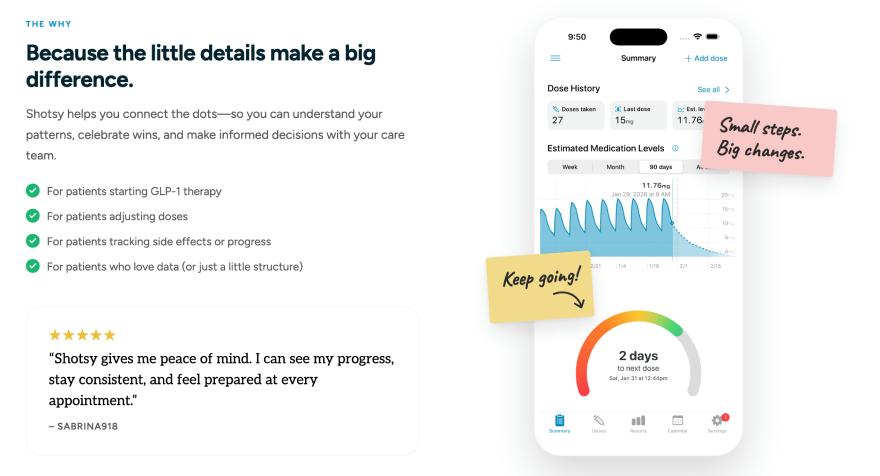
Shotsy does a good job in this category, too, but its analytics are more specialized. A key feature is medication level estimation, which gives users a visualisation of how much of a compound may still be active in the body between injections.
Pep AI has more data-driven bloodwork tracking. While not as extensive as some of its competitors, the ability to log lab markers alongside peptide protocols adds an extra dimension of context for users who prefer a more analytical workflow.
At the more basic end of things, PeptIQ allows users to track progress easily, without overwhelming them. The interface is geared more toward ease of use than feature depth, which may be a perk for those who prefer a simple experience.
Feature variety matters, but if you can’t get to them when and where you need them, even the coolest features become useless.
A peptide tracker that works perfectly on one device but is not synced up or cross-platform can be annoying after a while. Users increasingly want their health apps to work seamlessly across phones, tablets, and wearable devices, and to let data flow freely across ecosystems.
This is especially important for long-term tracking. Peptide protocols take months, and changing devices mid-cycle shouldn’t mean losing valuable data.
| iOS | Android | Web | Apple Health Integration | Google Health Integration | Data Export | |
|---|---|---|---|---|---|---|
| MAX Peptide AI | ✅ | ✅ | ❌ | ✅ | ✅ | ✅ |
| Pep AI | ✅ | ✅ | ❌ | ✅ | Limited | ✅ |
| Regimen | ✅ | ✅ | ❌ | ✅ | ✅ | ✅ |
| SHOTLOG | ✅ | ✅ | ❌ | Limited | Limited | Limited |
| PeptideKit | ✅ | ❌ | ❌ | Limited | ❌ | ✅ |
| Shotsy | ✅ | ✅ | ❌ | ✅ | ✅ | ✅ |
| PeptIQ | ✅ | ✅ | ✅ | ✅ | ✅ | ✅ |
| MeAgain | ✅ | ✅ | ❌ | Limited | Limited | Limited |
| Injectly | ✅ | ❌ | ❌ | Limited | ❌ | Limited |
| PepTracker | ✅ | ❌ | ❌ | ❌ | ❌ | ❌ |
Most of the apps are available on both iOS and Android, but a few are limited to a single ecosystem.
One of the better-known examples is Shotsy. The app’s reputation among iPhone users was built in large part on its polished interface and integration with Apple Health. This creates a particularly seamless experience for users already deep in Apple’s ecosystem, with weight and health data automatically syncing with the app.
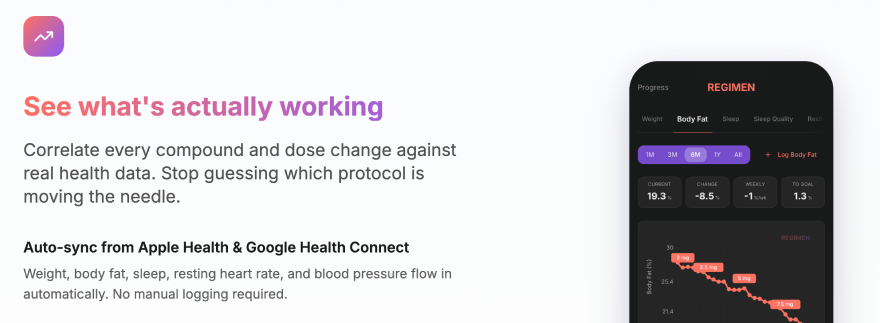
Regimen also does well here, with integration with both Apple and Google Health. This wider compatibility might interest users who regularly swap between devices or want to aggregate health data from multiple sources.
MAX Peptide AI is currently available on both iOS and Android devices.
As you can see from up to this point in the peptide tracker app comparison, accessibility is more than compatibility with devices. There’s also the question of how easy it is to move data from one system to another, and whether the app can continue to support users as their needs change.
Pricing is one of the easier things to compare, but not necessarily one of the easiest things to evaluate fairly.
Two apps for the same monthly price might seem, on the surface, to be almost identical. However, in practice, the user experience can be very different. Cost should always be a consideration in relation to function. A less expensive app isn’t a better deal if it lacks features you need or will potentially need in the near future.
| Monthly Price | Annual Price | |
|---|---|---|
| MAX Peptide AI | $12.99 | $34.99 |
| Pep AI | $9.99 | $39.99 |
| Regimen | $4.99 | $39.99 |
| SHOTLOG | Varies | Varies |
| PeptideKit | Varies | Varies |
| Shotsy | $9.99 | $39.99 |
| PeptIQ | $19.99 | $99 |
| MeAgain | $9.99 | $99.99 |
| Injectly | One-Time Purchase | One-Time Purchase |
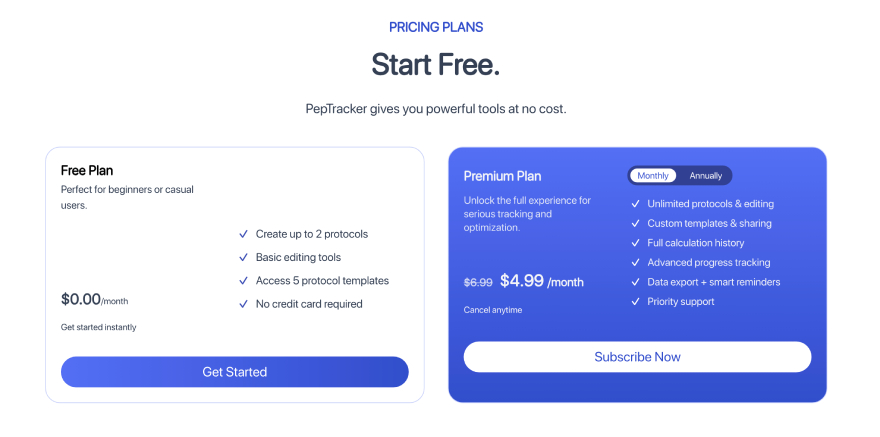
| PepTracker | $4.99 | $47.99 |
Note that all prices may be subject to change.
One thing that became apparent to me very quickly while doing research for this peptide tracker pricing comparison is that there is surprisingly little correlation between price and feature depth / variety.
Some of the lower-priced apps offer really good deals for what they bring to the table. For example, Regimen offers reminders, scheduling tools, and health integrations at a fairly reasonable price. This handles the needs of those users who are primarily interested in routine creation, without a bigger investment.
PepTracker appears to have a similar philosophy. It’s cheap and features a simple interface, making it friendly for beginners just wanting to get out of spreadsheets.
On the flipside, you have the feature-rich platforms, which justify higher pricing by doing more than just injection tracking. A good example of this approach is MAX Peptide AI. Peptide management is one of the app’s core features, but there’s so much additional value to unlock! All of that, for a fraction of the cost of many popular, mainstream applications of this kind.
Pep AI is in a similar space, especially for those who love inventory management and protocol organization. Meanwhile, Shotsy’s pricing reflects its strong position in the GLP-1 tracking market and a polished user experience.
All of that being said, you then have PeptIQ, which stands out for another reason - its pricing is among the highest on this list, when purchasing the monthly plan.
An important factor to consider is free trials. These periods give users the chance to try workflows, interfaces, and features without an upfront financial commitment.
The peptide tracker pricing comparison is also indicative of a larger industry trend: pricing will always be one of the core aspects that brands / projects compete on. You can always find a cheaper alternative to something - the trick is to settle on something that actually works, and won’t leave you broke at the end of the month.
By now, it should be clear that there isn’t a one, single feature that defines a great peptide tracker app.
Instead, the best platforms combine multiple features into a unified experience. Users then face the challenge of figuring out which combination of features best matches their own goals.
To assist with this process, I’ve summarized the most important features discussed in this guide into something resembling a comprehensive overview:
| MAX Peptide AI | Pep AI | Regimen | SHOTLOG | PeptideKit | Shotsy | PeptIQ | MeAgain | Injectly | PepTracker | |
|---|---|---|---|---|---|---|---|---|---|---|
| Injection Logging | ✅ | ✅ | ✅ | ✅ | ✅ | ✅ | ✅ | ✅ | ✅ | ✅ |
| Custom Protocols | ✅ | ✅ | ✅ | ✅ | ✅ | Limited | ✅ | Limited | Basic | Basic |
| Multi-Peptide Support | ✅ | ✅ | ✅ | ✅ | ✅ | Limited | Limited | ❌ | ❌ | ❌ |
| Peptide Calculator | ✅ | ✅ | ✅ | ✅ | ✅ | ❌ | Limited | ❌ | ❌ | ❌ |
| Reminders | ✅ | ✅ | ✅ | ✅ | ✅ | ✅ | ✅ | ✅ | ✅ | ✅ |
| Calendar View | ✅ | Limited | ✅ | ✅ | ✅ | ✅ | Limited | Limited | Limited | Limited |
| Inventory Tracking | ✅ | ✅ | Limited | ✅ | ✅ | ❌ | Limited | ❌ | Limited | ❌ |
| Reconstitution Tools | ✅ | ✅ | ✅ | ✅ | ✅ | ❌ | Limited | ❌ | ❌ | ❌ |
| Weight Tracking | ✅ | Limited | Limited | Limited | Limited | ✅ | ✅ | ✅ | Limited | ❌ |
| Progress Photos | ✅ | ❌ | ❌ | ❌ | ❌ | ❌ | Limited | ✅ | ❌ | ❌ |
| Body Composition | ✅ | ❌ | ❌ | ❌ | ❌ | ❌ | ❌ | Limited | ❌ | ❌ |
| Symptom Tracking | ✅ | Limited | Limited | Limited | ✅ | ✅ | Limited | ✅ | Limited | ❌ |
| AI Features | ✅ ✅ | Limited | ❌ | ❌ | Limited | Limited | ✅ | Limited | ❌ | ❌ |
| Health Integrations | ✅ | Limited | ✅ | Limited | Limited | ✅ | ✅ | Limited | Limited | ❌ |
| Data Export | ✅ | ✅ | ✅ | Limited | ✅ | ✅ | ✅ | Limited | Limited | ❌ |
Looking at the giant table, a number of distinct categories begin to emerge. Or, at least I hope that they do.
Apps like Shotsy and MeAgain are more lifestyle- and GLP-1-focused. They are strong in tracking progress, being easy to use, and providing a simple experience for users following relatively straightforward protocols. For many, that is exactly what they need.
Other platforms are designed for more advanced use cases.
For users running multiple compounds simultaneously, Pep AI and SHOTLOG are beneficial because they focus more heavily on organization and inventory management. Regimen is very much about consistency and scheduling, and PeptIQ is trying to strike a good balance between simplicity and some broader health tracking.
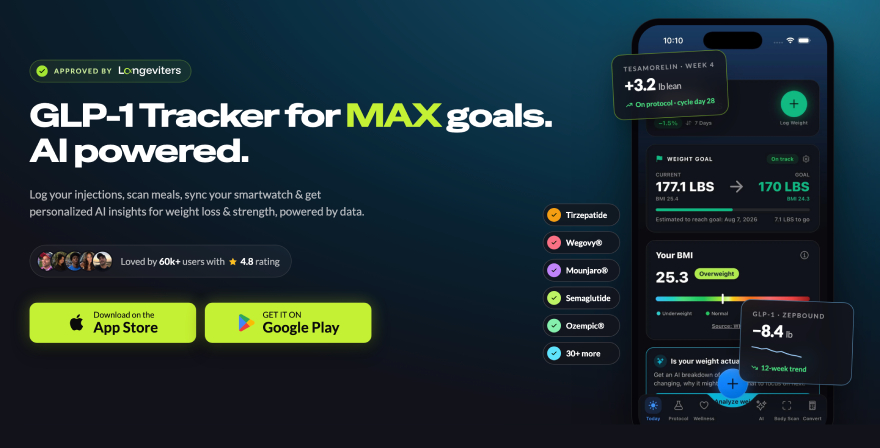
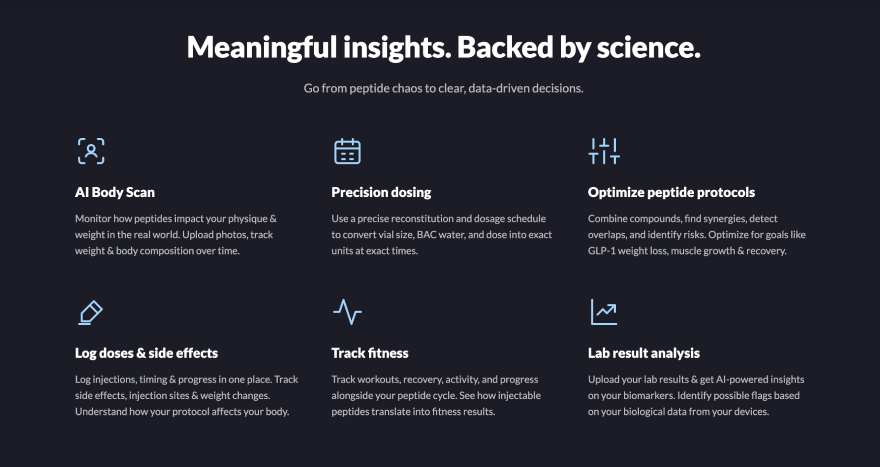
What makes MAX Peptide AI unique here is the depth of its ecosystem. It’s one of the very few platforms that combine peptide management, body composition analysis, nutrition tracking, health metrics, AI-powered insights, and protocol organization - all under one roof. Not all users will want that level of integration, but for those who prefer a “mega app” approach, it can greatly streamline their wellness-oriented experience.
Of course, feature checklists tell only part of the story. Two apps can have the same functionality, but the user experience can be vastly different. This isn’t something that’s easy to quantify, though - you’ll just need to try out the app yourself, and get a feel for it.
Whatever the case might be, a peptide tracker comparison chart is a good starting point. It makes it easier to quickly sort out apps that are worth a deeper look at from those that aren’t going to be a good fit for you.
The peptide tracking landscape has changed a lot in the last year or so. Nowadays, platforms often include protocol management tools, analytics, inventory tracking, general health integrations, and even AI-powered insights.
As we’ve discussed in this peptide tracker comparison, the right app ultimately depends on individual needs and long-term goals. Yes, it’s admittedly a “no sh*t!” kind of situation, but we tend to get lost in a lot of the noise and flashiness that we encounter on a daily basis.
Of all the apps listed in this guide, MAX Peptide AI stands out. It’s the most comprehensive overall, with tools that’ll satisfy any peptide user or general wellness enthusiast out there.
Of course, the "best" app is always going to be subjective to the individual user. The perfect platform for someone who is following a weekly GLP-1-based regimen may be different than one for a longevity enthusiast juggling multiple peptides and health metrics all at once.

 Verified
From the peptide tracker comparison above, MAX Peptide AI is the most complete option that stands out from the crowd, with a combination of protocol management, tracking tools, analytics, and broader health features. At the end of the day, it really comes down to what the user values most, though - simplicity, GLP-1 tracking, or advanced peptide management.
A peptide tracker comparison chart includes important features like injection logging, reminders, protocol support, inventory tools, analytics, and platform availability. I’ve used a peptide tracker comparison chart in this guide to give a comprehensive side-by-side overview of 10 well-known apps.
Peptide tracker apps are built specifically for injectable compounds and protocols. These apps will generally focus on features like dosing calculators, reconstitution tools, inventory management, and injection scheduling - features that you won’t often find in typical fitness or wellness apps.
MAX Peptide AI has a lot of features, but it’s also beginner-friendly, and features advanced tools that users can leverage over time. That means new users don’t have to change apps down the line when they get more experienced, making the application in question one of the strongest choices for both first-time and advanced peptide users alike.
Yes. Many of the modern peptide tracker apps were originally developed for GLP-1 peptides, such as semaglutide and tirzepatide. Apps like Shotsy and MeAgain are more GLP-1-specific, with features like weight & symptom tracking, and injection scheduling.
Research does suggest that self-monitoring and reminder systems (like purpose-specific apps) can improve adherence. While no app will guarantee consistency, features like reminders, tracking, and progress visualization have been associated with higher user engagement over time.
Join 60,000+ longevity biohackers and get our 5-min weekly read with the latest findings, research-backed protocols and tips to boost your daily habbits!
Searching for results...
Please wait while we find the resultsNo results found for ""
Try searching for a different termSomething went wrong
Please try again later