







APP 50% OFF
Get Exclusive Discount





When thinking about peptide tracking apps, nowadays, people want features like dose tracking, weight loss graphs, side effect tracking, nutrition planning, and ideally - some info as to whether the whole protocol is actually working.
To be fair, there are plenty of advanced-level apps to choose from, and in this Glapp vs Shotsy comparison, we’ll be looking at two well-known options.
Both apps are for GLP-1 users, not for advanced peptide stack management. They’re both similar in that regard, but there are still enough differences for them to suit different users. So, after reading this comparison, you should be able to figure out which one will work better for your specific wants and needs.
Neither of the two peptide trackers in question is as full-featured as MAX Peptide AI, especially if you want to track more than just GLP-1 peptides.
Before we get too specific, take a look at this general overview table I’ve come up with below:
| Glapp | Shotsy | |
|---|---|---|
| Main focus | GLP-1 tracking | GLP-1 tracking |
| iOS | ✅ | ✅ |
| Android | ✅ | ✅ |
| Web access | ✅ | ❌ |
| Injection logging | ✅ | ✅ |
| Injection site tracking | ✅ | ✅ |
| Reminders | ✅ | ✅ |
| Weight tracking | ✅ | ✅ |
| Nutrition tracking | Limited | ✅ |
| Water tracking | Limited | ✅ |
| Side effect tracking | ✅ | ✅ |
| Medication level curve | ✅ | ✅ |
| Progress charts | ✅ | ✅ |
| Advanced peptide stack support | Limited | Limited |
| Best for | Shot tracking, side effect notes, medication curves, and GLP-1 cycle context | GLP-1 shot logging, weight progress, nutrition metrics, side effects, and polished charts |
First of all, you should know that both apps are built around GLP-1 peptides. We’re talking about people who use Ozempic, Wegovy, Mounjaro, Zepbound, and other similar weight-loss-oriented drugs.
Glapp markets itself as a GLP-1 drug and weight loss tracker for people on tirzepatide and semaglutide. Its features include shot logging, dose timing, injection site tracking, weight change tracking, hunger levels, and so on.
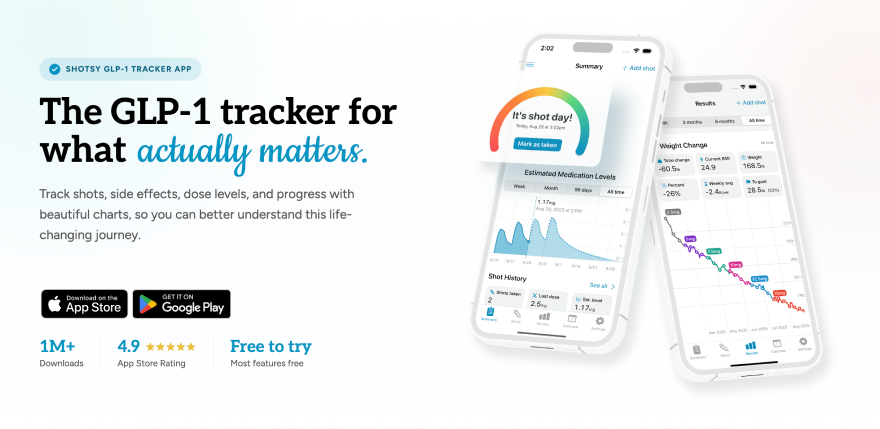
In a large way, Shotsy is similar. It focuses on weekly GLP-1 injections, side effects, weight tracking, progress charts, nutrition metrics, and injection reminders. However, it’s generally viewed as the more “technical” of the two.
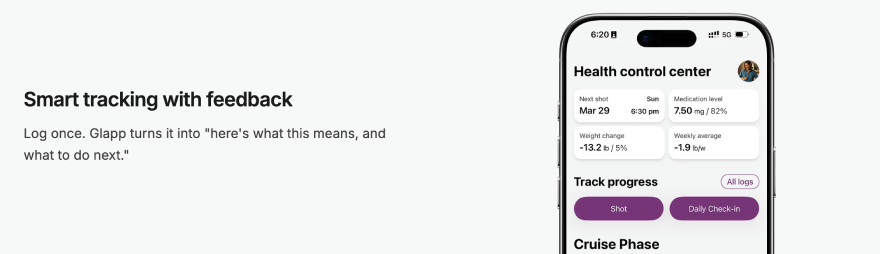
Here’s the basic idea behind this Glapp vs Shotsy comparison: Glapp appears to be more focused on understanding the GLP-1 cycle, while Shotsy is more about logging the broader weight-loss routine around the peptides you might be using.
Which is better, Glapp or Shotsy, really depends on what you want the app to do. Just remember that neither app is really built around the deeper peptide ecosystem.
On a surface level, Shotsy vs Glapp looks like a pretty even matchup. However, as you might have gathered already, that’s not necessarily the case when you take a closer look at the specifics.
So, let’s do just that.
| Glapp | Shotsy | |
|---|---|---|
| Shot logging | ✅ | ✅ |
| Oral GLP-1 support | Limited | ✅ |
| Hunger tracking | ✅ | Limited |
| Medication level charts | ✅ | ✅ |
| Web access | ✅ | ❌ |
| Apple / Google Health integration | ✅ | ✅ |
| Broad peptide ecosystem | ❌ | ❌ |
Glapp is strong when it comes to tracking things like hunger, food noise, cravings, mood, energy, bowel movements, sleep, side effects, and how medication levels can rise and fall after taking a shot. The app appears to also support features like injection site logging, weight tracking, weekly progress reports, among others.
The biggest strength of Shotsy is its routine tracking. According to its own listing, it allows users to log injections or daily pills and track medication history, side effects, weight, calories, protein and water intake, as well as set custom dose reminders and view estimated medication levels over time.
Both apps are useful, but they are still narrow compared to a full peptide tracker. Which is better, Glapp vs Shotsy, is a matter of user preference, but if the real goal is long-term peptide and wellness management, platforms like MAX Peptide AI are still where it’s at.
While both Shotsy and Glapp feature the core GLP-1 tracking experience, they don’t emphasize the same things. Glapp appears more concerned with helping users understand the medication cycle itself, while Shotsy feels more like a polished daily companion for GLP-1 use.
Let’s take a look at some of the biggest similarities and differences between the two apps, on a key-feature level. This way, you’ll be able to get a better idea of which app might suit your needs better, depending on what’s important to you.
| Glapp | Shotsy | |
|---|---|---|
| Injection logging | ✅ | ✅ |
| Dose amount tracking | ✅ | ✅ |
| Dose timing | ✅ | ✅ |
| Injection site tracking | ✅ | ✅ |
| Custom reminders | ✅ | ✅ |
| Oral pill tracking | Limited | ✅ |
| Multiple medication schedules | Limited | ✅ |
| Medication level curve | ✅ | ✅ |
This is where both apps really shine, but you’d probably expect that, since if a GLP-1 tracker can’t handle basic dose logging, it’s basically useless.
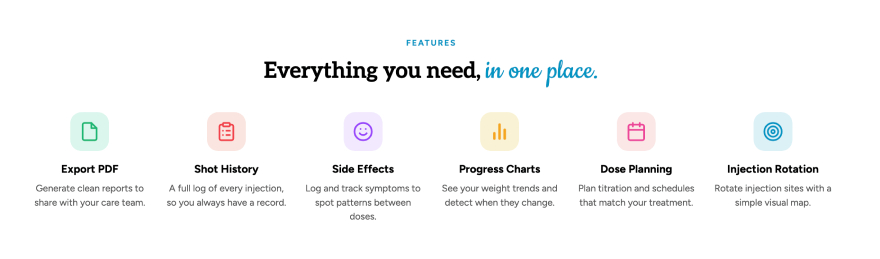
Glapp enables users to track their shots, doses, timing, and injection sites. It also includes reminders, medication curves, and weight progress at each dose level.
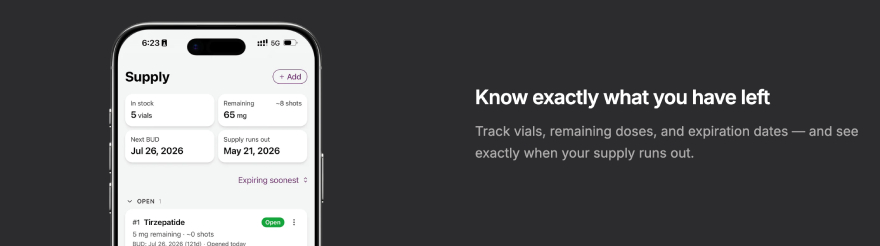
Shotsy has all of the basics covered, as well. Users can log daily injections or pills, view complete medication history, schedule weekly doses, and get reminders and next dose notifications. It also supports multiple drugs with different schedules simultaneously - a very practical feature if your routine is not limited to a single peptide.
If you’re focused on your weekly GLP-1 cycle, Glapp is strong. If you want flexible medication scheduling, Shotsy appears stronger.
The injection site logging is a noteworthy feature. Injectable therapies are often recommended to be rotated to reduce irritation, tenderness, and stress in one area. A tracker that recalls where you injected last week can spare you the common “wait, left thigh or right thigh?” routine.
| Glapp | Shotsy | |
|---|---|---|
| Calorie tracking | Limited | ✅ |
| Protein tracking | Limited | ✅ |
| Water tracking | Limited | ✅ |
| Hunger tracking | ✅ | Limited |
| Cravings | ✅ | Limited |
This is where Shotsy pulls a bit ahead, at least as far as this Glapp vs Shotsy comparison is concerned.
Shotsy proudly includes calorie, protein, and water intake trackers as part of the app. They mention Apple Health and Google Health integrations, which can be used to import weight, calories, protein, and water intake data, making the app feel more useful for those who already track these things elsewhere.
This is important because GLP-1s don’t function in a vacuum[1]. Appetite suppression can make weight loss easier, but users still have to eat enough protein, drink enough water, and avoid becoming malnourished.
Glapp has a different take on this. It’s not so much about traditional nutrition logging, but more about hunger, cravings, and how those signals line up with the GLP-1 shot cycle.
That's helpful, but it's not quite the same as tracking nutrition.
So, I’d say Shotsy is better if you want real calorie, protein and water tracking. But, if you want to understand appetite, hunger, cravings, and food noise in relation to your medication cycle, Glapp is a decent choice here, as well.
Neither is perfect if you want to link nutrition tracking with broader data on peptides, training, body composition, and general wellness.
| Glapp | Shotsy | |
|---|---|---|
| Side effect logging | ✅ | ✅ |
| Symptom context | ✅ | ✅ |
| Hunger / craving connection | ✅ | Limited |
| Injection site connection | Limited | ✅ |
| Nutrition / hydration connection | Limited | ✅ |
| Shareable doctor-friendly records | Limited | ✅ |
Nausea, constipation, diarrhea, headaches, reflux, fatigue, appetite changes - these are all common side effects of GLP-1s. Not everyone gets them, and severity varies a lot, but it can be useful to track patterns when talking with a clinician about dosage, timing, nutrition, hydration, and tolerability.
Glapp’s site talks about injection phases and how to use them to predict hunger, cravings and side effects before they show up. That gives Glapp a little more of an interpretive feel, allowing users to log side effects and relate them to the potential cause easily.
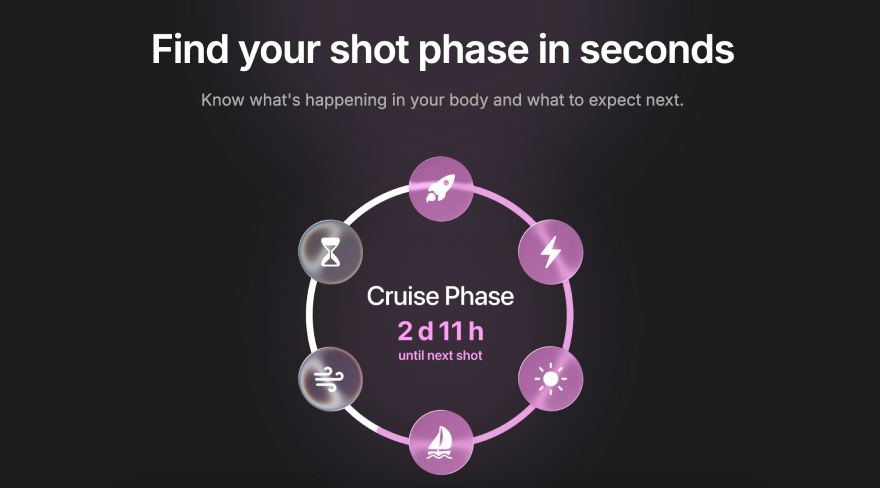
Here, however, Shotsy is more practical and data-friendly. The company’s own website says users can log side effects such as nausea, headaches and fatigue, and then correlate those symptoms with specific doses, injection sites, nutrition or hydration. Users can also export doses, side effects, and their weight into a dedicated PDF file to share with a healthcare provider.
It’s a concrete advantage. A lot of people are not good at accurately remembering symptoms. They come in for an appointment and say, “I felt weird last week,” and clinically that’s about as helpful as a horoscope. A structured timeline of symptoms is much more useful.
It’s also one of the few places where health app design can really matter. Research into medication adherence and self-management has found that reminder systems, symptom logging, and self-monitoring tools can help users become more involved in treatment routines[2], particularly when the information is easy to review and discuss with a doctor.
| Glapp | Shotsy | |
|---|---|---|
| Weight tracking | ✅ | ✅ |
| Weight loss progress dashboard | ✅ | ✅ |
| Weight trend charts | ✅ | ✅ |
| Progress by dosage | ✅ | ✅ |
| Progress photos | ✅ | ❌ |
| Visual medication curve | ✅ | ✅ |
One of the easier aspects of the Glapp vs Shotsy comparison is weight tracking, since both apps understand the obvious - which is that most GLP-1 users aren’t logging shots for fun. They want to see if the treatment is actually making a difference.
Glapp directly describes itself as a “medication and weight loss tracker”. The app shows weight progress by dose level, weekly progress reports, and a dashboard with weight loss progress and shot phase indicators. It feels nice, like a "here's where you are on the journey" kind of thing, instead of just a spreadsheet of numbers.
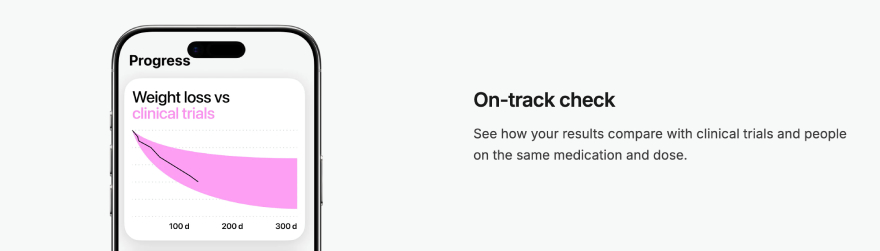
Shotsy is good here, as well. The app lets users log weight, see their progress over time, and look at trends on a weekly, monthly, or since-the-start basis. There are also weight graphs and estimated peptide levels, making the app more visual.
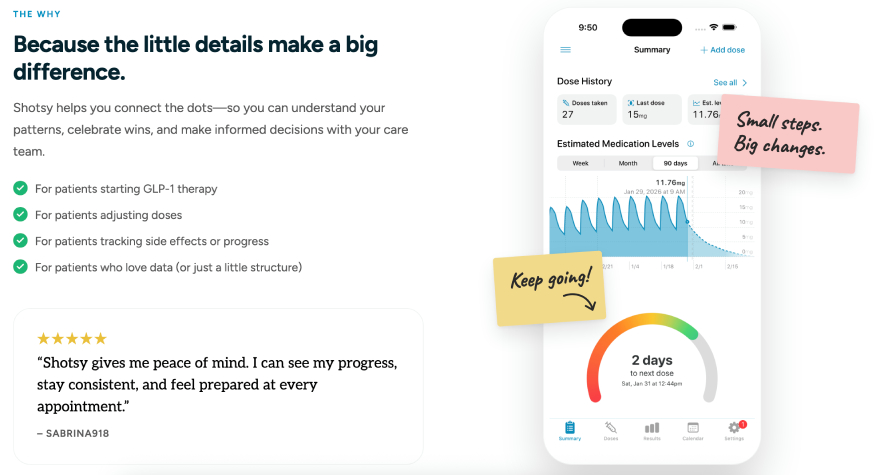
Shotsy does, however, get an extra point for data presentation. It’s all about charts, analytics, color coding by dose, and timelines you can export. Glapp, on the other hand, feels more like a story. It lets you link weight changes to the weekly GLP-1 cycle, hunger swings, cravings, energy, and dose phases.
So, regarding Glapp vs Shotsy, which is better for visual progress tracking?
If you want charts, trends, and more traditional weight-loss visuals, Shotsy probably wins. If you want to understand weight progress through medication phases and appetite context, Glapp may feel better.
| Glapp | Shotsy | |
|---|---|---|
| Weight trend charts | ✅ | ✅ |
| Estimated medication curve | ✅ | ✅ |
| Dose-phase insights | ✅ | Limited |
| Nutrition-related charts | Limited | ✅ |
| Side effect pattern tracking | ✅ | ✅ |
| Weekly reports | ✅ | Limited |
| Exportable data visuals | Limited | ✅ |
In this part of the Glapp vs Shotsy comparison, both apps offer decent value. The idea behind Glapp is to make the GLP-1 cycle something that people can really understand. Shotsy is more chart-heavy in the traditional sense.
That gives this particular app more of an analytics feel. If you like to compare weight, dose changes, nutrition, and side effects in a more structured way, Shotsy probably gives you more to look at. It’s the better option for people who enjoy the “data dashboard” aspect of weight loss.
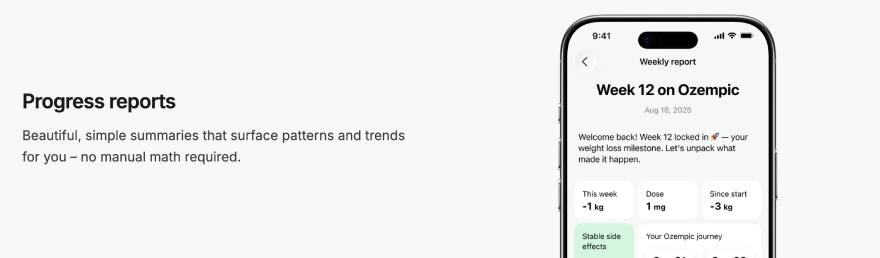
Glapp feels more coach-like. It tries to explain where you are in the medication cycle and how that might relate to hunger, cravings, energy, mood, sleep, and other metrics. That’s useful for those who want interpretation, not just charts.
The downside is that both apps are still essentially GLP-1-specific. Neither looks like a full-body health analytics system. This is where apps like MAX Peptide AI have a wider reach - peptide tracking, body composition, nutrition, training, health metrics and AI-driven insights all in one place.
Ease of use is subjective, for the most part. That said, there are still some aspects that we can look at.
If you want the app to explain the GLP-1 schedule to you, Glapp will work great in this regard. Rather than forcing users to stare at a chart and interpret it all on their own, the app elaborates on what different parts of the cycle may mean.
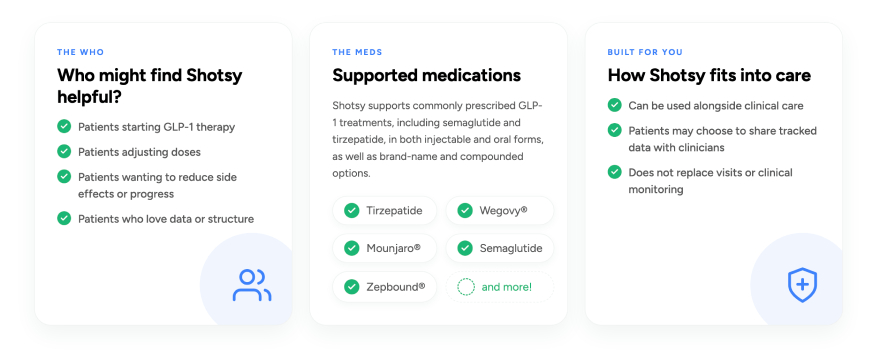
Shotsy is easier if you know what you want to track already. It has more of a complete weight-loss tracker layout: doses, side effects, weight, nutrition, progress charts, reminders, and medication estimates. This can make it feel more powerful, but also a little noisier.
So, in short, for those users who want guidance, Glapp is better. Shotsy is better for users who want a more robust dashboard and data-heavy experience.
| Glapp | Shotsy | |
|---|---|---|
| iOS | ✅ | ✅ |
| Android | ✅ | ✅ |
| Web | ✅ | ❌ |
| Apple Health | ✅ | ✅ |
| Google Health | ✅ | ✅ |
| Data export | Limited | ✅ |
| Cross-device access | ✅ | ✅ |
One of Glapp’s more impressive aspects is accessibility. It’s available on both iOS and Android, and features a web interface (to some extent), as well. It offers a good practical advantage if you like logging from a laptop or tracking progress over a browser.
Shotsy is now also available for both iOS and Android. Its strengths lie in integrations and data exports - naturally, you have features like Apple / Google Health sync, which will help you optimize your data tracking experience even further.
Either of the two apps works fine for everyday GLP-1 tracking. For a more serious, long-term peptide tracking setup, however, this is yet another place where a broader app starts to look more enticing.
| Glapp | Shotsy | |
|---|---|---|
| Weekly | ❌ | ❌ |
| Monthly | $9.99 | $9.99 |
| Annual | $39.99 | $39.99 |
Glapp's is free to use. However, you can opt to subscribe to Glapp Max, and unlock a variety of additional features of the app. The monthly pricing for this subscription is $9.99, while the annual sub will set you back $39.99.
Shotsy also has a free version available. On its official site, it states that all core features, such as dose & side effect tracking, charts, and nutrition logging, are free, with premium tools available for those who want more. The pricing for this app is identical to Glapp - $9.99 for a monthly subscription, $39.99 for the annual option.
So, when it comes to Glapp vs Shotsy pricing, both options are basically the same.
That’s honestly a good thing, since you don’t need to take pricing into account when making the decision of which app might suit you better. Or, in other words - you’ll be able to make the decision based on the features alone, without the price tag getting in the way.
If I had to make some sort of conclusion for this Shotsy vs Glapp comparison, I’d put it this way - both apps are good at what they do, but both are also fairly limited.
I don’t necessarily mean this in a negative way. They are GLP-1 trackers, and they behave like GLP-1 trackers. If you want to log your shot, monitor weight loss, track symptoms, and understand your peptide routine, both apps can work fine for you.
But if you want a broader peptide and wellness setup, there are much stronger alternatives out there - I’ve mentioned it multiple times in this article already, but MAX Peptide AI is one of the most notable options.
| Glapp | Shotsy | MAX Peptide AI | |
|---|---|---|---|
| GLP-1 tracking | ✅ | ✅ | ✅ |
| Custom peptide protocols | Limited | Limited | ✅ |
| Multi-peptide support | Limited | Limited | ✅ |
| Inventory tools | Limited | Limited | ✅ |
| Reconstitution tools | Limited | ❌ | ✅ |
| Body composition tracking | Limited | Limited | ✅ |
| Nutrition tracking | Limited | ✅ | ✅ |
| Training tracking | ❌ | ❌ | ✅ |
| AI insights | Limited | Limited | ✅ |
| Broader wellness dashboard | ❌ | ❌ | ✅ |
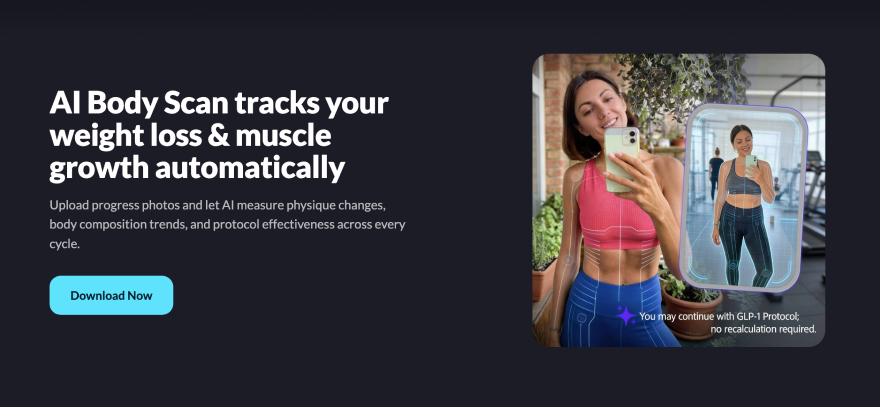
MAX Peptide AI is more of a “mega app” than just a peptide tracking diary. It integrates peptide management, custom protocols, inventory tools, reconstitution calculators, reminders, nutrition tracking, body composition analysis, training logs, health metrics and AI-powered features into a single ecosystem.
This is important because the use of peptides is rarely straightforward. Someone might start with a weekly GLP-1 injection and later want to track everything from body composition and health markers, all the way to a myriad of different peptides. At that point, a lightweight tracker - especially one that’s limited to GLP-1s - can feel underwhelming.
If you’re looking for a top-tier option for all of your peptide tracking needs, I highly recommend checking MAX Peptide AI out.
To sum up this Glapp vs Shotsy comparison, I’ll say this - both apps are similar in what they offer, but at the same time, they will both suit somewhat different user profiles.
Glapp might be the better option if you want a GLP-1 tracker to help you understand the weekly peptide cycle - things like hunger, cravings, side effects, and dose phases. If you want a more comprehensive daily weight loss tracker with nutrition, water, side effects, charts, reminders, and exportable records, Shotsy will likely be better.
That being said, both apps fall in comparison to broader peptide tracking tools, with MAX Peptide AI being the perfect example. If you’re searching for a single app to use for a long time to come, this will certainly prove to be the superior choice.

 Verified
Comparing Glapp vs Shotsy, the former is probably going to be a bit better if your main concern is understanding your GLP-1 cycle. It highlights things like hunger, cravings, side effects, medication curves, and much more. However, if you want a more rounded daily tracker, Shotsy might be the more appealing option. Furthermore, if you’re looking to track more than just GLP-1s, MAX Peptide AI will prove to be superior to both of the aforementioned apps.
The main difference is the tracking philosophy. Glapp is more like a GLP-1 cycle interpreter, while Shotsy is closer to a GLP-1 weight loss dashboard. Glapp is better for medication phase context, and Shotsy will probably suit users looking for data-driven tracking better.
Glapp vs Shotsy pricing is pretty similar. Both apps feature monthly and annual plans, and both are priced the same - $9.99 per month, or $39.99 per year. Judging by user feedback left online, most enthusiasts seem to agree that the pricing for both apps is fair, considering what you get in return.
Research shows that mobile apps may be useful as tools for weight management, particularly when they support self-monitoring and routine building. That doesn’t mean an app, in itself, will make you lose weight, or be the “perfect solution” for managing your peptides. It simply means that tracking apps can help make the routine easier to understand, remember, and adapt.
If you want something wider than a GLP-1 tracker, MAX Peptide AI is the better option. This app surpasses its competitors with custom peptide protocols, multi-peptide support, inventory tools, reconstitution tools, body composition, nutrition, training, health metrics and AI features.
Glapp may feel slightly easier for beginners because it focuses more on the weekly GLP-1 cycle, while Shotsy may be better once you want to track more daily habits like protein, water, calories, and weight trends.
Join 60,000+ longevity biohackers and get our 5-min weekly read with the latest findings, research-backed protocols and tips to boost your daily habbits!
Searching for results...
Please wait while we find the resultsNo results found for ""
Try searching for a different termSomething went wrong
Please try again later