












APP 50% OFF
Get Exclusive Discount





Arthritis can impact an older dog amazingly fast. Walks become shorter, stairs get harder to climb, and getting up after a long nap takes more effort. Arthritis is a progressive disease that involves the degeneration of cartilage and inflammation, eventually leading to serious problems - that’s why pet owners are starting to look into peptides for dogs with arthritis.
Some peptide-based compounds are being studied for anti-inflammatory & connective tissue effects, wound healing, and joint function. Certain collagen-derived peptides already have controlled research in dogs with naturally occurring osteoarthritis.
Many experimental compounds have little or no direct clinical research in arthritic dogs, however. So, in this article, we’ll look at peptides for dogs with arthritis to try and prod this topic a bit further - just remember to stay curious about what the research might bring, but don’t take early evidence as a veterinary recommendation.
Any treatment, peptide-based or not, should be discussed with a vet beforehand!
Dog arthritis isn’t just a simple case of cartilage wearing down with age. Osteoarthritis is a disease of the whole joint. The problem is progressive - further related issues develop over time, it isn’t just isolated within the cartilage itself. With time, the pain may cause the dog to use the affected limb less, which leads to muscle loss and puts additional stress on other parts of the body.
There probably won’t be a biological “switch” that will turn back an arthritic joint. But the interest in peptides for dog arthritis is not in their direct action, but in the possibility of influencing certain processes involved in inflammation, connective-tissue maintenance, healing, and joint function.
Inflammatory molecules can encourage cells within an arthritic joint to produce enzymes that break down components of the cartilage matrix. This eventually creates a cycle of inflammation, tissue degradation, and pain.
That’s one reason why research into peptides for dogs with arthritis is interesting, in the first place. Some compounds have the ability to act on inflammatory or tissue-repair pathways in animals. Certain peptides have been studied in relation to collagen, tendons, ligaments, blood-vessel formation, or cartilage-associated tissues.
It is worth keeping in mind, though, that “peptides for dog joints” is a broad term. It can refer to nutritional collagen-derived peptides with direct studies in dogs[1], or experimental compounds whose reputation is mostly based on lab studies.
As you can imagine, there is a pretty notable difference between the two groups.
All of that means you should be looking into which peptides have evidence for arthritis, what the evidence actually shows, and whether the findings have been replicated in dogs vs seen in other species.
Now, let’s talk specifics. We’ll take a look at the most commonly mentioned and referenced compounds when it comes to discussions about peptides for dogs with arthritis.
Most of these are going to be experimental and / or research peptides, so keep that in mind moving forward.
Of all the experimental peptides for dogs with arthritis, BPC-157 is probably the one that gets the most attention.
It’s essentially a synthetic 15-amino-acid peptide. Most of the interest surrounding its potential effects on joints is based on animal research looking at tendons, ligaments, inflammation, and tissue healing[1] - not veterinary trials in arthritic dogs.
That being said, some research does come really close to the arthritis question!
In a study involving rats with post-traumatic knee osteoarthritis[3], over a period of a few weeks, the BPC-157-treated rodents showed a significant improvement in knee function and less destruction of cartilage and bone than the untreated ones.

While these weren’t independently replicated veterinary trials, and dogs differ from rats quite a bit, the results are still promising, nonetheless.
Lab research has also suggested that BPC-157 can increase tendon fibroblast migration and survival[4], which may help explain some of the tissue-healing effects seen in other trials, as well.
BPC-157 has produced some very compelling findings in experimental animal models, many of which have led to a lot of interest regarding peptides for dogs with arthritis. However, direct evidence in dogs is still limited. That’s why BPC-157 is still considered to be an experimental peptide.
TB-500 is another experimental peptide sometimes discussed alongside BPC-157 for joint injuries and connective-tissue repair. That has, of course, put it into the conversation around peptides for dogs with arthritis, particularly when an older dog is dealing with both degenerative joints and stressed tendons or ligaments.
Note that TB-500 is a derivative of thymosin beta-4, and sometimes, the two names are used loosely or interchangeably. That shouldn’t be the case - these two compounds are different from one another!
One of the most relevant studies published in 2026 investigated TB-500 directly in rats recovering from surgically repaired Achilles tendon injuries[5]. TB-500, BPC-157, a combination of both, and an untreated control group were tested by researchers.
Treatment with TB-500 resulted in improved collagen organization and tissue architecture after four weeks, and significantly increased resistance to mechanical failure relative to untreated tendons. Interestingly, the combination of TB-500 and BPC-157 didn’t clearly beat out the use of the compounds individually.
That's in line with previous research on the peptide sequence associated with TB-500, which has been associated with biological processes such as:
This makes TB-500 interesting when compared to peptides for dog joints, but also shows where the current limits of the evidence lie - to date, there are no good controlled trials that show TB-500 improves naturally occurring osteoarthritis in dogs.
What the current research does show, however, is that TB-500 may affect several processes involved in connective-tissue repair. This might ultimately be relevant for dogs with arthritis associated with tendon, ligament, or other soft tissue problems, but that possibility has not been adequately tested in studies involving dogs.
KPV is a much smaller, less-known peptide than BPC-157 or TB-500, but it’s notable for a different reason - inflammation.
KPV’s underlying molecule, α-MSH, has been studied for decades for its anti-inflammatory effects, including in experimental models of arthritis. KPV seems to retain much of that anti-inflammatory activity without some of the other biological effects associated with the full hormone.
That makes KPV potentially relevant to peptides for dogs with arthritis, because inflammation is a big part of osteoarthritis progression and pain.
In one study in mice, systemically given KPV reduced the accumulation of inflammatory cells in experimentally induced inflammation[6]. The researchers also found evidence that KPV may interfere with cartilage degradation and joint inflammation.
There's some joint-specific lab evidence, as well. In studies of human chondrocytes, melanocortin signaling was shown to exert anti-inflammatory and cartilage-protective effects[7]. One of the peptides tested was KPV.
To date, there are no convincing clinical trials that KPV improves naturally occurring osteoarthritis in dogs. That said, the justification for KPV as one of the possible peptides in dog arthritis is that it may have an impact on inflammatory pathways involved in joint degradation.
Bioactive collagen peptides are the oddball of this list.
They’re not usually discussed as experimental injectable compounds like BPC-157, TB-500, or KPV. These are small collagen-derived peptides given orally, and importantly, there is actual clinical research done in dogs with naturally occurring osteoarthritis.
I’m referring to a controlled study of 31 dogs with osteoarthritis, followed for 12 weeks in 2024[8]. One group received specific bioactive collagen peptides, and the comparison group received omega-3 fatty acids and vitamin E. Researchers say the dogs were assessed with a force-plate treadmill, activity monitors, and owners completing the validated Canine Brief Pain Inventory.
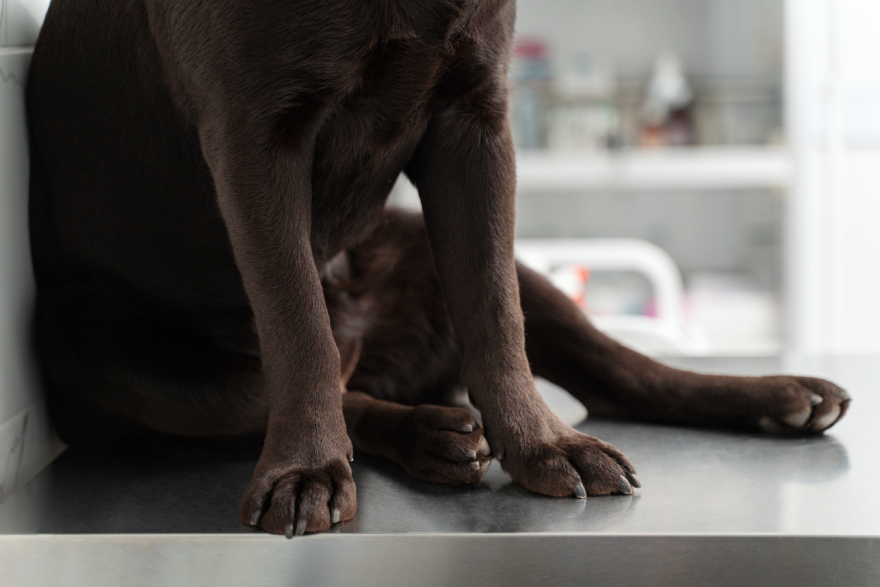
The results were very promising. Significant improvements in several objective walking-related measurements and owner-reported quality of life were observed in dogs receiving the collagen peptides. However, activity monitors did not show a significant change in total daily activity.
The study did not show that cartilage had somehow grown back, or that the underlying osteoarthritis had vanished. It instead displayed measurable improvements in the way dogs moved, and in the way owners assessed their dogs’ pain-related quality of life metrics.
Hydrolyzed collagen has also been previously studied in combination nutritional interventions. In a placebo-controlled study of 42 dogs with naturally occurring osteoarthritis, a diet including hydrolyzed collagen with curcuminoids and green-tea extract reduced pain on joint manipulation[9], although several other measures of mobility did not improve significantly.

The effect can’t be attributed solely to collagen, as there were a bunch of ingredients used together, too.
Among the various peptides for dogs with arthritis, collagen-derived compounds have an advantage that many experimental compounds don’t - controlled studies in actual pet dogs with osteoarthritis.
Hip problems require their own, separate discussion as hip dysplasia and arthritis are not the same thing, even if they often become intertwined.
Canine hip dysplasia is a disease in which the hip joint does not develop properly and becomes loose or unstable. Over time, abnormal motion can lead to damage to the cartilage, inflammation, and eventually - secondary osteoarthritis.
This is particularly relevant when talking about peptides for hip dysplasia in dogs. No peptide can simply reconfigure a poorly developed hip socket or restore normal joint geometry. If the underlying problem is looseness of the joint or abnormal bone structure, these are mechanical and anatomical problems.

Depending on severity and age, veterinary management may range from weight control and rehabilitation to anti-inflammatory medication or surgical procedures such as total hip replacement.
The peptide question is more relevant when we look at what happens to the surrounding joint over time in a dog with hip dysplasia. A dysplastic hip may eventually involve:
These are the secondary problems that make peptides for dog hips important to talk about.
For example, studies related to BPC-157 and thymosin beta-4 have been directed at connective tissue healing, fibroblast activity, collagen organization, angiogenesis, and inflammatory processes. On the other hand, KPV mainly attracts attention due to its anti-inflammatory activity, while collagen-derived peptides take a completely different route and already have some direct canine osteoarthritis data.
You don’t need to “rebuild the hip” to offer truly helpful therapy for an older dog with hip dysplasia and already established osteoarthritis. Improvement in things such as weight bearing, stiffness, or willingness to move could still be very impactful.

That’s the more realistic way to think about peptides for dogs with hip dysplasia. The big question is whether certain peptide pathways could eventually help address inflammation, connective-tissue stress, and osteoarthritis.
That’s kind of where we’re currently at, as far as scientific research around peptides for dogs with arthritis goes.
Once the individual compounds are placed side by side, one thing becomes obvious - the evidence for peptides for dogs with arthritis is all over the place.
A study performed in rats can tell us whether a biological mechanism deserves further investigation. It cannot tell us with confidence how an arthritic Labrador, German Shepherd, or senior mixed-breed dog will respond to the same compound.
Here's roughly where the peptides we've discussed currently stand:
| Peptide | Direct Evidence in Arthritic Dogs | Other Relevant Evidence | Current Picture |
|---|---|---|---|
| BPC-157 | Limited | Rat osteoarthritis, ligament and tendon models | Interesting preclinical evidence, but not established in dogs |
| TB-500 | Limited | Tissue repair, angiogenesis, inflammation, rat tendon healing | Interesting, but canine arthritis evidence is lacking |
| KPV | Limited | Anti-inflammatory and chondrocyte research | Mostly theoretical for canine arthritis |
| Bioactive collagen peptides | Yes! | Additional joint and cartilage research | Best direct canine evidence among those discussed |
Collagen-derived peptides are currently the most relevant group of compounds when it comes to real-world peptides for dog arthritis. It’s the only non-experimental group on this list, as well.
BPC-157 is an interesting “in-between”. Its research-related findings are certainly worth exploring further, but both of the major osteoarthritis studies involving BPC-157 were done with rats, and were pre-clinical. TB-500 is one step further away from arthritis itself. It appears to have positive effects on tendon repair, but that’s not the same as treating chronic osteoarthritis.
Experimental peptides are very promising - there’s no denying that. But the science is at different stages for different compounds, and as with most things in life, progress is slow. With a surge in interest regarding peptides for dog joints, however, there’s hope that set-in-stone scientific breakthroughs aren’t far off, as well.
The problem with experimental compounds like BPC-157, TB-500, and KPV is that we don’t have good enough canine safety data to know what the full risk profile is.
Think about it - let’s say you decide to use one of the less-studied research peptides for your dog. You’d probably have some basic questions, including but not limited to:
Great questions to ask, but the answers might not always be obvious.
Older dogs may already be on other pain relievers, supplements, or medications for unrelated health problems. This complicates things, since drug interactions can get rather unpredictable.
Furthermore, many experimental peptides are sold online as “research use only”, not as licensed veterinary drugs. The FDA says unapproved animal drugs in the United States have not been reviewed by the agency for safety, effectiveness, manufacturing quality, labeling, or consistency[10]. It puts them in a sort of grey area.
Purity and sterility are important for a peptide that is going to be injected. A promising molecule on paper does not do much good if the vial contains the wrong concentration, peptide-related impurities, or microbial contamination.

It’s a distinction worth making because there is a big difference between a vet deciding that an experimental or compounded therapy is appropriate for a particular animal, and a pet owner purchasing a research peptide online and coming up with a dose at home.
For compounds for which canine protocols have not been established, the safety question is still part of the bigger research question. It’s one of the strongest reasons to involve a veterinarian in the use of peptides in an arthritic dog, rather than experimentation based on human protocols or anecdotal dosing advice.
It’s worth mentioning, however, that if you look online, it would appear that more and more people are taking matters into their own hands, and researching these peptides themselves. A lot of it has to do with how slow the scientific progress regarding this topic really is.
Current veterinary guidelines already recognize osteoarthritis as a condition that requires multiple approaches at the same time. This may include weight management, controlled activity, rehabilitation, pain medication, nutritional interventions, and, in some cases, regenerative or surgical interventions, depending on the situation.
On the “official, regulated” plane, peptides might eventually fit into that same model.
Some peptides for dogs with arthritis are being investigated for biological processes that conventional pain relief doesn’t necessarily target directly. Researchers are exploring fields such as:
For example, an NSAID may be helpful for managing arthritis pain and inflammation, and physical rehabilitation is used to maintain muscle and mobility. Future therapy based on peptides could, in theory, target another part of the problem, for example, tissue repair or a specific inflammatory pathway.
Veterinary medicine is already headed in this broader direction. Orthobiologic and regenerative therapies, including platelet-rich plasma and mesenchymal stem-cell therapies, are being explored for canine osteoarthritis to alter the joint environment rather than simply provide pain relief.
Peptide research could be another branch of this “new-age” system.
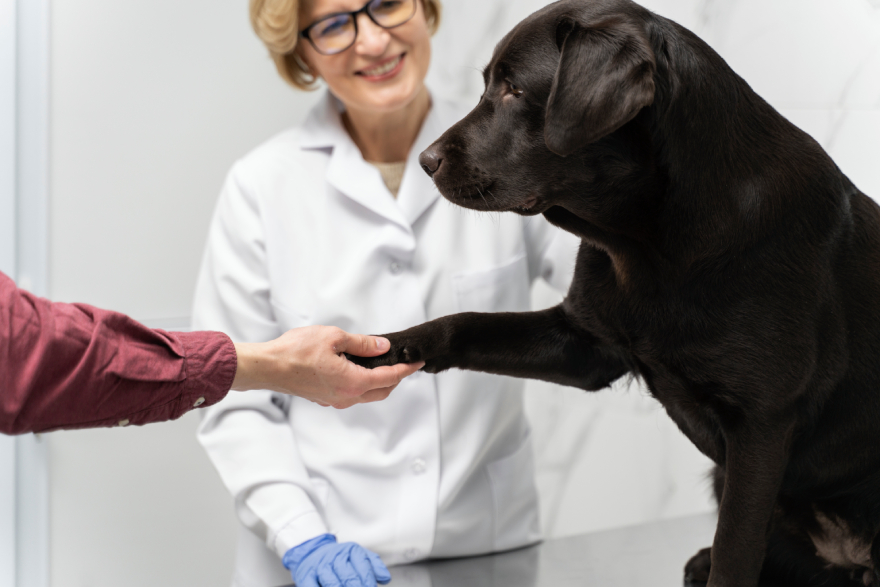
That’s probably the most pragmatic way to go about peptides for dog joints today. They are not a substitute for keeping a dog lean, maintaining muscle, or treating the underlying orthopedic problem.
But if future canine trial results are similar to some of the tissue-healing and anti-inflammatory findings already observed in experimental research, certain peptides might prove to be valuable additions to a broader arthritis treatment plan.
Peptides for dogs with arthritis is a promising area of research, especially since some compounds are being studied for their effects on inflammation, connective-tissue repair, and joint function.
Currently, in dogs, the best evidence for potential benefits comes from collagen-derived peptides, while BPC-157, TB-500, and KPV are still more experimental. Nevertheless, the pre-clinical research is interesting enough to suggest that peptide-based therapies may eventually become an established part of caring for dogs with arthritis.
If your dog has arthritis or hip dysplasia, peptides can be thought of as a new option to consider. As better dog studies come out, we should get a much clearer idea of which compounds really help with joint health, mobility, and recovery.
As always, though, all of what we’ve discussed is for educational purposes only - any treatment should be discussed with your veterinarian first!

 Verified
Potentially! Several peptides for dogs with arthritis have demonstrated promising effects in relation to inflammation, tissue repair, and joint function, but the strength of evidence varies quite a bit between the different compounds.
The most talked-about peptides for dog arthritis are BPC-157, TB-500, KPV, and bioactive collagen peptides. At this point, there is less direct evidence in dogs for the experimental injectable compounds than for the collagen-derived ones.
BPC-157 is sometimes mentioned for canine joint problems, but as of now, it’s not an established veterinary arthritis treatment option. Most of the evidence comes from osteoarthritis-, tendon-, and ligament-related studies in rodents.
Hip dysplasia is a structural abnormality of the joint that peptides can’t fix. Interest in peptides for dogs with hip dysplasia is instead geared toward alleviating secondary issues such as arthritis, inflammation, connective-tissue strain, and mobility problems.
It depends heavily on the compound. Many of the experimental peptides for dog joints still lack long-term canine safety data, standard dosing, and reliable information about interactions. That said, it’s worth noting that their use is becoming increasingly popular among pet owners.
At this time, no compelling clinical evidence exists that peptides can fully regenerate cartilage in dogs with established osteoarthritis. Some compounds can affect inflammation, collagen production, or tissue-repair pathways, but that’s not the same as rebuilding a damaged joint.
Join 60,000+ longevity biohackers and get our 5-min weekly read with the latest findings, research-backed protocols and tips to boost your daily habbits!
Searching for results...
Please wait while we find the resultsNo results found for ""
Try searching for a different termSomething went wrong
Please try again later