












APP 50% OFF
Get Exclusive Discount





Peptides are one of the hottest topics in longevity circles right now, due to the potential benefits they can provide the user with. That’s why we’ve recently focused on educational content surrounding this topic, as well. That said, did you know that there are peptides for dogs?
The concept can refer to a few different things. Some peptide-based drugs are already widely used in veterinary medicine (think insulin for canine diabetes), but other compounds discussed on the internet are more experimental and have a lot of hype starting to build up around them.
Dog peptides have recently been attracting attention for injury recovery, wound healing, inflammation, mobility, and healthy aging, but to be fair, the science is still kind of murky around the topic.
Confusing, isn’t it? Let’s try to have an educated overview of peptides for dogs - what they are, what they’re not, and what research right now shows.
Note that nothing in this article should be construed as a dog peptide recommendation. Before trying peptide therapy for your dog, owners should always consult with a veterinarian who is familiar with the dog’s health history, medications, and medical condition.
Peptides are short chains of amino acids, the same building blocks that make up proteins. The difference lies primarily in size and structure - proteins are usually bigger and more complicated, while peptides are shorter molecules, and usually have very specific jobs that they do in the body.

Dogs produce a lot of peptides naturally. Some are hormones, others are involved in immune defense, appetite signaling, metabolism, inflammation, tissue repair, or simply communication between cells. The easiest example to understand is probably insulin. It’s a naturally occurring peptide that regulates glucose throughout the body.
So, the term “dog peptides” can actually refer to a number of different things:
Dogs and other mammals naturally make small peptide molecules as part of their normal immune defense. Researchers are investigating whether some of these molecules, or synthetic versions based on them, could be useful against bacterial, fungal, or other infections.
That’s an active area of veterinary research, especially as antimicrobial resistance makes some infections increasingly difficult to treat.
Most therapeutic peptides interact with specific receptors or signaling pathways. In that way, they act as a form of instruction to cells.
Depending on the molecule involved, peptide signaling can influence things like:
An example of how far-reaching these effects can be is research on appetite-related peptides. In studies of obesity in pets, scientists have examined peptide systems involving GLP-1s and various other signaling molecules[1], because each has a different role in food intake and energy balance.
Much of the current research is still geared toward understanding biology and identifying future therapeutic possibilities, rather than establishing routine peptide treatments for dogs.
The administration route may differ, as well. Some medicines based on peptides are injected, others can be delivered through an implant, topically, or orally, depending on the purpose and the chemistry of the compound.
This is particularly important as we get into injectable peptides for dogs later on in the article. If a peptide is biologically active, that doesn’t necessarily mean that injecting it is appropriate, safe, or clinically useful.
Some peptides have been used for years in animals. These drugs have specific indications, formulations, dosing rules, and a lot of veterinary oversight. Let’s take insulin as an example.
In dogs, diabetes can lead to insufficient production of insulin to effectively control blood glucose. Treatment usually involves replacing the missing peptide hormone with injectable insulin. Certain products, like Vetsulin and ProZinc, have been approved by the FDA (in the US, that is) to assist in the management of diabetes in dogs[2].
This is technically peptide therapy for dogs, but most pet owners would just refer to it as insulin therapy.

Another veterinary example is deslorelin, a synthetic analog of the gonadotropin-releasing hormone, or GnRH. Deslorelin acts on the reproductive hormone system.
In Europe, the deslorelin-containing implant Suprelorin is authorized for particular reproductive uses in dogs. The European Medicines Agency lists applications[3] including temporary infertility in male dogs, and the authorization was later extended to some female dogs to prevent pregnancy at a young age.
Note how different these two aforementioned treatments are:
| Peptide | Main Role in Dogs | Veterinary Status |
|---|---|---|
| Insulin | Blood glucose control in diabetes | Established veterinary treatment |
| Desrolerin | Reproductive hormone regulation | Authorized for specific canine uses in some jurisdictions |
| Experimental peptides such as BPC-157 | Various proposed regenerative effects | Not yet established as routine treatments |
A peptide may be of biological interest; it may be tested on dogs in a laboratory setting; and it may also be shown to safely treat a naturally occurring disease or injury in ordinary pet dogs. These are all different things.
There are also geographical aspects to consider here, as well. A veterinary drug may be approved in one country for use in dogs, but not in another, or it may have different approved indications with different regulators.

So, you can see why the answer to the question “are there peptides for dogs?” isn’t that straightforward. Peptide meds do play a genuine role in established veterinary care, but in many cases, that’s not what pet owners are looking for.
Instead, many people are turning towards the so-called "experimental peptides".
At the beginning of the article, I alluded to the fact that the research surrounding these peptides is still in its infancy. When you look online, however, the excitement is definitely already there - these types of peptides appear to be especially popular among people who own senile dogs, and feel like they "have nothing to lose", wanting to extend the time with their pets and alleviate any ailments that they might be suffering from.
And you can't really blame them - the little research that does exist is promising.
When you look at what veterinary medicine is already trying to accomplish in areas like rehabilitation and regenerative care, the surge in interest in peptides for dogs starts to make a bit more sense.
Dogs are living longer than they used to, owners are more willing to treat chronic conditions, and issues such as osteoarthritis, tendon injuries, or slow-healing wounds can become major problems. A 2023 review of canine regenerative medicine shows that emerging methods are being studied and used especially for tissue healing, osteoarthritis, and soft-tissue injuries[4], often alongside physical rehabilitation.

That’s not to say peptides themselves are proven solutions to those problems. However, it does shed light on why scientists study biological molecules that can affect inflammation, cell signaling, blood-vessel growth, or tissue remodeling. Modern veterinary medicine is very interested in using biological signals to influence healing.
In turn, naturally, researchers start to wonder if individual peptides might do something similar, but with more specificity. Most of the interest in experimental peptides for dogs tends to fall into a few broad categories:
Some of these goals are already being addressed by other kinds of medicine (non-peptide related). Studies tend to highlight the issues of standardization and the need for more robust clinical evidence. This context is important because there’s often a difference between “this peptide affects tissue repair in a lab” and “this peptide can heal my dog’s injury”.
A molecule may increase cell migration in a dish, accelerate wound closure in rodents, or have interesting pharmacologic effects in a lab environment, but never provide any worthwhile benefit to your companion. At the same time, many owners are willing to take the risk, if it means that there'll be a chance their pet feels better and / or lives longer.

The interest is understandable; there’s good reason for researchers to study peptides for dogs. But, while online testimonials can be helpful, controlled canine research should still be the most important source of information.
With all of the context we’ve discussed above, you can imagine that finding the best peptides for dogs isn’t really an easy goal to accomplish. Online lists often mention BPC-157, TB-500, GHK-Cu, and a few other compounds, but they're not ‘proven’ treatment options.
None of the peptides discussed in this section should be viewed as recommendations, in any way. There’s enough scientific interest and / or research that is relevant to them that makes them worth looking at, sure, but you should always consult with a veterinarian before considering any peptide, especially an experimental one.
As you search for the best peptides for dogs, BPC-157 is likely the most popular experimental compound that’ll come up. It’s particularly mentioned when it comes to tendon injuries, ligament recovery, wounds, and gut health.
The good news is that BPC-157 has actually been studied in dogs.
In 2022, a pharmacokinetic study administered BPC-157 to beagles and investigated what happened to the compound in their bodies[5]. Absorption, metabolism, distribution, and elimination were all looked at. During the study, the original BPC-157 molecule had an elimination half-life of less than 30 minutes, and was rapidly degraded into smaller fragments and amino acids.
The study did not look at whether or not BPC-157 can heal injured dogs. The research wasn't conducted on pet dogs recovering from torn ligaments, arthritis, surgical procedures, chronic wounds, or mobility problems. It only looked at what a dog’s body does with BPC-157 once it is administered.
There is also a preclinical toxicology study on mice, rats, rabbits, and dogs. Researchers in that study found that BPC-157 was generally well-tolerated in the experimental conditions, including repeated exposure in dogs[6]. There was mild local irritation and a change in creatinine at the highest canine dose tested.

Now, a controlled toxicity experiment doesn’t prove that the commercially available peptide injections for dogs are safe in normal veterinary practice. It does not tell us what the effect is of using different manufacturers, or when treatment is continued for longer periods, or when older dogs are treated, or else. You get the picture.
So, while BPC-157 has more direct canine research than many experimental peptides for dogs, there's still a lot of work that needs to be done, before this peptide is "officially" approved as being useful for dogs.
You’ll hear TB-500 mentioned a lot when talking about peptides for dogs, usually in relation to faster healing of tendon injuries, muscle damage, wounds, or after surgery.
The issue is that TB-500 and thymosin beta-4 are often discussed as if they are the same compound. They’re not.
Thymosin beta-4 (normally abbreviated "Tβ4") is an endogenous peptide present in a large variety of tissues. It binds to actin, a protein involved in cell shape and movement, and has been studied by researchers for several biological effects related to tissue repair.
In animal studies, full-length thymosin beta-4 has been linked to:
For example, researchers have found that thymosin beta-4 accelerated healing of full-thickness skin wounds in rats[7], with increases in re-epithelialization, collagen deposition, and angiogenesis. Similar regenerative effects have been reported in other reviews, in a number of animals, including aged and diabetic rodents.
Where does TB-500 fit into all of this? Well, thymosin beta-4 is a protein that contains 43 amino acids. Products sold as TB-500 have been found to contain a much shorter synthetic sequence derived from an active region of thymosin beta-4.

This is all very sciencey, but in plain terms, it simply means that research showing an effect from full-length thymosin beta-4 cannot be automatically used as evidence that the commercially marketed TB-500 will produce the same effect.
The molecules are related, but they're not pharmacologically interchangeable just because one came from the other.
Some owners are told that TB-500 is one of the best peptides for dogs because “studies show thymosin beta-4 heals tendons”. In many cases, the study being referenced did not:
That is all to say - TB-500 can work for dogs, but there's still too little research to prove that conclusively. In the absence of clinical data in dogs, TB-500 should be considered an experimental drug, and not an established tool for the treatment of canine injuries or rehabilitation.
GHK-Cu is an interesting case - unlike the experimental compounds we’ve discussed as potential peptides for dogs, there actually is some direct canine wound healing research behind this particular compound.
GHK is a three-amino-acid peptide that is capable of binding copper ions. The resulting complex GHK-Cu has been studied for its effects on things like collagen production and wound repair.

In one study, researchers locally injected a tripeptide-copper complex during healing in 12 adult English Pointer dogs with standardized wounds in the paw pads. The experiment tracked wound size and markers related to collagen over a number of weeks. In treated wounds, researchers observed improved healing characteristics[8].
Another canine study looked at a topical tripeptide-copper complex in open wounds where the lesser blood supply makes healing more difficult. This work adds to the evidence that copper-binding peptides are capable of affecting canine wound repair under controlled experimental conditions[9].
This puts GHK-Cu in a bit different of a position than peptides like TB-500. This is at least direct dog research, rather than evidence that is virtually entirely extrapolated from rodents or other animals.
While these studies do not make commercially available GHK-Cu products routine veterinary treatment, the peptide has a more convincing canine evidence base compared to many of the internet-popular alternatives people view as the best peptides for dogs.
Not all peptides being studied for dogs are related to injury recovery.
One of the more interesting areas of veterinary peptide research is infection control, especially the study of antimicrobial peptides. They are small molecules that the body naturally produces as part of the immune system’s first line of defense.
Dogs make several of them in their skin, including beta-defensins and cathelicidins. These peptides have been detected in the skin of healthy dogs, and their expression has been studied in diseases such as dermatitis[9]. Skin infections in dogs can be difficult to treat, particularly when the bacteria become resistant to the antibiotics that are most commonly used, so this is promising.
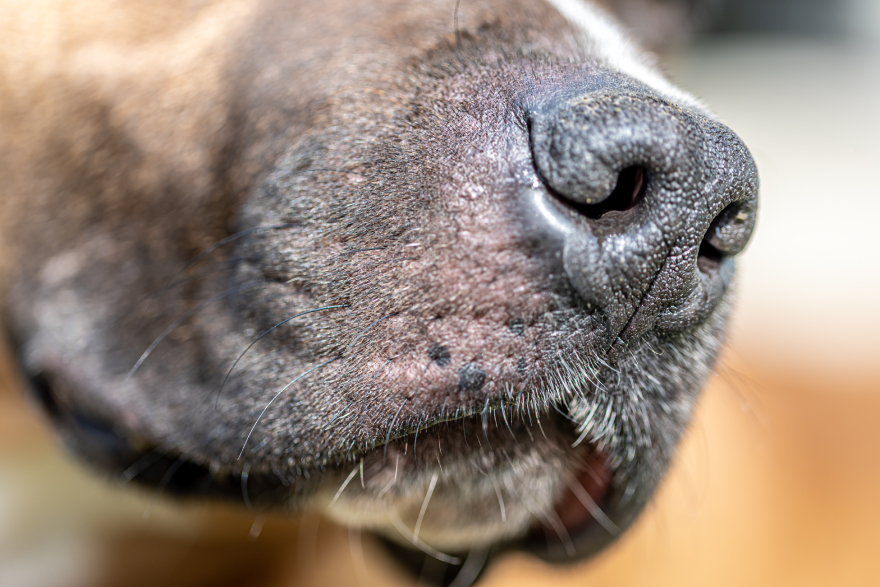
One peptide of particular interest is canine beta-defensin 103, or CBD103. In laboratory studies, it was able to kill methicillin-sensitive bacteria that cause skin infections in dogs[10]. Another study of antimicrobial peptides from dogs demonstrated activity against several resistant bacterial strains and yeasts[11].
The findings hint that naturally occurring host-defense peptides might one day help researchers develop alternative or complementary approaches to treating infections.
The first thing to look out for with experimental injectable peptides for dogs is what is really in the vial.
Approved veterinary medicines are reviewed for manufacturing quality, potency, labeling, safety, and effectiveness. Compounding animal drugs is not subject to the same approval process. Specifically, the FDA points out that drugs compounded from bulk substances have not been reviewed for safety, effectiveness, proper manufacturing, and stability like those approved for animals[12].
A label of “BPC-157” or “GHK-Cu” on a vial does not exactly verify:
Sterility is particularly important with anything being injected. Poor preparation practices can lead to bacterial or fungal contamination, or products with too much or too little active ingredient.
Another point - using a human peptide protocol and scaling down the amount based on body weight does not provide a safe dose for dogs. Drugs may be absorbed, metabolized, distributed, and eliminated differently in canines. Age, breed, body composition, kidney and liver function, concurrent medications, and existing disease can all alter the picture even further.

Even the route of injection matters. A compound, studied intravenously or intramuscularly, cannot be assumed to behave in the same manner when given subcutaneously.
If an injectable peptide is truly indicated for a dog’s condition, selection of product, formulation, dose, route, and monitoring should be done by a veterinarian. With experimental compounds, the uncertainty surrounding the peptide is already large enough without adding uncertain dosing and questionable product quality to the mix.
So - are peptides safe for dogs?
There is no simple yes-or-no answer to that question. Insulin, given appropriately to a diabetic dog, has a different safety profile than an experimental peptide bought over the internet and given without veterinary guidance.
Safety is established for each compound, at each dose, and for a particular use.
BPC-157 is a good example. In a study related to this peptide that I mentioned earlier, relatively low toxicity has been reported under the tested conditions. The dogs were all given multiple doses, and researchers monitored clinical signs, blood chemistry, organ changes, and other related metrics.
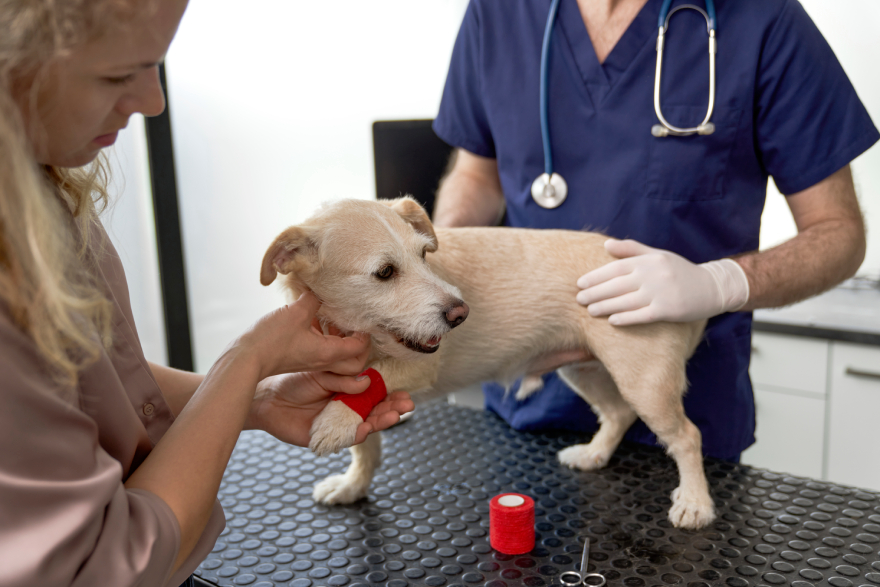
While that is reassuring as preliminary toxicology data, it does not answer the broader question of are peptides safe for dogs in real-world use.
A laboratory toxicity study does not tell us the whole story about:
Also, there is a difference between not seeing obvious toxicity and proving that a treatment is both safe and beneficial. A compound could have few adverse effects in the short term, and yet have no clinical benefit of use.
And then there’s the aforementioned product quality that should be considered, as well - figuring out what is actually in the vial can be a headache.
The future of peptides for dogs probably looks very different from the conversation we’re having around BPC-157 and TB-500 today.
Some of the most interesting work is being done on topics like antimicrobial resistance, wound care, immune regulation, and regenerative medicine. Antimicrobial peptides are gaining increasing attention from researchers as they can act against bacteria, fungi, and other pathogens, while also affecting immune responses.
Ways to make peptides more stable and deliverable are also being explored. Many peptides suffer from a problem of rapid degradation in the body. In recent years, modified peptide structures, controlled release systems, and peptide-containing hydrogels have been developed to prolong the residence time of active molecules at the site of the wound or infection.

So, as you can see, the long-term promise of dog peptides may be less about finding one “miracle peptide”, and more about creating highly targeted treatments for specific diseases.
It's hopeful science, but a lot of it's still very much in the research phase. The next big step involves more controlled trials in dogs that show what treatments work, for which dogs, at what doses, and what the long-term risks are.
Let’s sum things up.
Peptides for dogs cover a really wide spectrum of compounds, ranging from well-established veterinary drugs like insulin to experimental compounds that are being tested for wound healing, inflammation, tissue repair, and other potential uses.
Some compounds (such as BPC-157 or GHK-Cu) have been studied directly in dogs; others are mostly based on research in rodents, laboratory models, or related peptides. There’s an important distinction between interesting science and proven veterinary treatment.
To date, most experimental dog peptides don't really have a lot of evidence about safety, effectiveness, dosing, and long-term use, particularly for ordinary pet dogs with real-world injuries or chronic conditions.
That being said, the interest from pet owners is there, and there's a lot of excitement building around the topic online. If you’re thinking of using peptides for dogs, talk to a vet first. The science is moving fast, but the risks need to be considered, as well.

 Verified
There is no scientifically proven list of the best peptides for dogs. Some compounds have been studied in dogs, such as BPC-157 and GHK-Cu, but that doesn't make them proven treatments. Based on online discussions, though, it would seem that people are most interested in the aforementioned BPC-157, GHK-Cu, and TB-500.
It really depends on the compound, dosage, formulation, and the medical situation of the dog. Some peptide medicines have obvious veterinary applications, but many experimental peptides have insufficient canine safety data for routine treatment. Always consult your vet before making any pet peptide-related decisions.
Canine studies have looked at BPC-157, but there is currently not a lot of clinical evidence to demonstrate its efficacy in treating common injuries or diseases in pet dogs. Needless to say, BPC-157 should never be administered to your dog based on human protocols or anecdotal reports.
Some peptide injections for dogs, such as insulin for diabetes, are well established. Experimental injections of compounds like BPC-157 or TB-500 are a different matter, and lack the same level of veterinary evidence or regulatory oversight. Some vets may allow it, others won’t - it depends on a few different variables.
I hope I don’t really need to say this, but a peptide that’s designed or tested for humans should never be given to a dog. Dogs metabolize medications differently, and a human dose is not safe or effective in a dog just because it is scaled down by body weight.
Researchers are studying peptide therapy for dogs and the peptide biology involved in wound healing, tissue repair, antimicrobial defense, inflammation, metabolism, and regenerative medicine, among other areas. Some of this research is promising, but much of it is still experimental or preclinical.
Join 60,000+ longevity biohackers and get our 5-min weekly read with the latest findings, research-backed protocols and tips to boost your daily habbits!
Searching for results...
Please wait while we find the resultsNo results found for ""
Try searching for a different termSomething went wrong
Please try again later