











APP 50% OFF
Get Exclusive Discount





If you’re into weight loss and peptide research, you may have heard of GLP-1-based compounds before. Now, there’s a new generation of peptides that’s starting to push things even further. Retatrutide is a name that keeps coming up, with more and more wellness enthusiasts looking into what is a reta peptide.
Indeed, it’s a compound that scientists are looking into to see how it affects weight, blood sugar, and overall metabolism. Retatrutide works rather differently from other similar supplements because it targets multiple biological pathways at the same time.
In fact, early studies show reta peptides may affect appetite, energy use, and fat metabolism in ways that are very different from other peptide-based therapies. At the same time, it's still very much in the “being researched” phase, so it's important to tell the difference between real science and hype.
If you plan to use retatrutide peptide, note that it’s not currently FDA-approved, and can thus be difficult to get a hold of. If you do still want to use it, monitor your progress and side effects carefully, with handy tools like MAX Peptide AI app.
So, on a fundamental level, what is reta peptide?
The term "reta peptide" is a short name for retatrutide, an experimental drug that scientists are looking into to see how it affects things like metabolic health, body weight, and energy levels. When people ask what retatrutide peptide is, they are talking about the same thing: a peptide made in a lab that is meant to work with certain hormone pathways in the body.
In other words, retatritude is a synthetic peptide that was made to act like and improve the activity of hormones that are naturally present in the body and help with metabolism.

What sets it apart from other compounds is the fact that it targets so many pathways at once. Retatrutide is a ‘triple receptor agonist’, which means it turns on three important hormone receptors:
Most of the earlier therapies only worked on one or two of these. Retatrutide combines all three into one peptide, which is one big reason why it's getting so much attention lately.
Fundamentally, it's still just a chain of amino acids, like other peptides. But it works more like a metabolic regulator than just a building block. Instead of giving your body nutrients like collagen peptides do, it sends signals that change how your body deals with hunger, blood sugar, and energy use.

Your body doesn’t use retatrutide as a raw material - instead, it’s a tool that changes signaling pathways. Because of this, it’s currently mostly being studied in clinical settings rather than used as a standard over-the-counter product. We know a lot about it from controlled trials, where scientists try to figure out both its potential benefits and long-term effects.
Now that we know what is reta peptide, let’s talk about what happens to it once it gets into the body. Or, rather, what the science appears to show so far.
One of the main effects of the reta peptide comes from it turning on your GLP-1 receptors. This pathway has been studied a lot and is known for lowering hunger signals, slowing down the emptying of the stomach, and helping to keep blood sugar levels stable.
This is how a lot of current weight-loss drugs work. But with retatrutide, it's only one part of the puzzle, because you then have GIP - a hormone that affects how your body handles nutrients, especially fats and carbohydrates. This is the second pathway.
Activating this receptor may make insulin work better, help keep blood sugar levels stable, and change how nutrients are stored or used.
Lastly, glucagon receptor activation is linked to more energy being used, as well as your body being able to use fat as fuel a lot better, and a potential rise in the rate of metabolism.
Put short, one part of retatrutide may help you eat less, while another part may help your body burn more fat.
Most existing compounds either try to lower the number of calories you eat or raise the amount of energy you use. Retatrutide tries to do both of these things at the same time, and on top of that, it also works to help the body control blood sugar better.
Theory’s nice, but what does the science show, though?
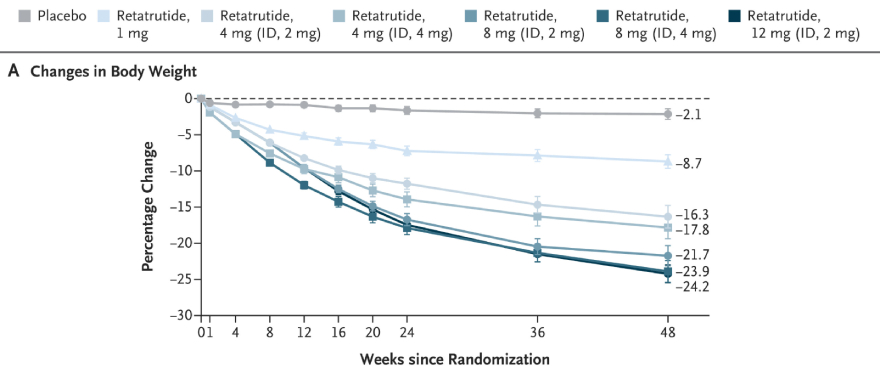
Preliminary studies seem to corroborate reta’s multifaceted impact. A phase-2 clinical trial published in the New England Journal of Medicine demonstrated substantial weight reduction and enhancements in cardiometabolic indicators[1], showing that these pathways are not merely theoretical but yield quantifiable results over time.
However, retatrutide doesn't "override" biology overnight, even though the mechanisms sound strong. This peptide still isn’t FDA-approved - reta is currently firmly in its “research and trials” stage.
With the basics of what is reta peptide out of the way, let’s move on to discuss some of its most commonly claimed benefits.
This is where things get interesting, but as a reminder, most of the information comes from controlled clinical trials, not from people using the product every day for a long time. That being said, the results so far are good enough to explain why this compound is getting so much attention.
The most talked-about effect of the reta peptide is weight loss. Frankly, I don’t think that’s surprising at all.
The earlier-mentioned study published in the New England Journal of Medicine showed that people who took retatrutide lost a significant amount of weight over 48 weeks. Some groups lost more than 20% of their body weight on average - that’s a crazy number, when you think about it.

The causes for this come from the aforementioned effects that reta peptide has on your body - a loss of appetite, longer digestion, and more calories burned over a shorter period of time.
This combination is what makes the benefits of the retatrutide peptide stand out from earlier single-pathway methods.
Retatrutide seems to also help the body process glucose better. Clinical data indicates higher levels of glucose when fasting, a better response to insulin, and more stable blood sugar levels after meals.
This is mostly because of its GLP-1 and GIP activity, which have a direct effect on how insulin is released and how glucose is used. This is more important for longevity than you might think. Poor blood sugar control is strongly linked to diseases that come with getting older, so making changes here is about more than just looks or weight.

Another important area is general metabolic health. People who took part in clinical trials saw improvements in lipid profiles in the blood and signs of inflammation[2].
Some of these changes are due to weight loss, but some of them seem to happen regardless. This suggests that the peptide itself may directly affect how metabolism works.
Another interesting thing about retatrutide is how it changes how much energy you use. It seems that the effects that the reta peptide has on glucagon receptors result in more calories burned without really doing anything[3], and the use of fat as a fuel resource for the body.
Things get more speculative from here on out, but it's still worth talking about.
How sensitive your body is to insulin, body composition, long-term inflammation - all of these things are strongly connected to long-term health outcomes.
Research suggests that retatrutide may indirectly increase lifespan by improving several aspects at once[4]. But it's important to be clear: there are no long-term studies on people that show that lifespan extension is possible.

So, even though things are looking good, this is still something to keep an eye on instead of relying on. Even with good results, effects take time, and results differ among individuals.
Lifestyle is still a big part of it. Furthermore, all other peptides and supplements you take will undoubtedly affect how your body interacts with retatrutide, as well. This is true from collagen to trulicity.
Tracking your peptide intake and dosage properly is important. It’s a good idea to use a high-end app to do so - with MAX Peptide AI app, you’ll be able to calculate your doses, track side effects, and even use AI to analyze how your body is reacting to your stack!
So, while reta peptide does appear to come with quite a few benefits, they alone don't tell the whole story. We also need to look at the other side of the equation - safety, risks, and possible downsides - to see if this compound is really worth considering.
We’ve talked about what is reta peptide, discussed some of its prominent benefits, so naturally, the next question is - what are the risks?
While the retatrutide peptide benefits look good, the compound is still fairly new. That means we have good short-term clinical data, but not much long-term real-world data.
Most of the side effects that have been reported are the same as those seen with other GLP-1-based treatments.
According to one study, the most common retatrutide peptide side effects were feeling sick and throwing up, as well as diarrhea or constipation[5].
These are mostly problems with the digestive system, and they usually happen at the beginning of the treatment phase, or at higher doses. For the majority of participants, these effects were mild to moderate and frequently faded over time as the body acclimated to the supplement.

While the reta peptide can help you lose weight, this can also be a bad thing if you take it too far. Using the compound could lead to hunger levels that are very low, having trouble getting enough calories, or less interest in food in general.
This is carefully handled in a controlled setting. But away from the lab, too much appetite suppression could cause a lack of nutrients, and in more extreme cases - muscle loss.
One important pattern that comes up in many studies is that side effects tend to get worse as the dose goes up. This is a common trade-off in pharmacology, which is why most protocols use gradual dose escalation instead of going straight to higher doses.
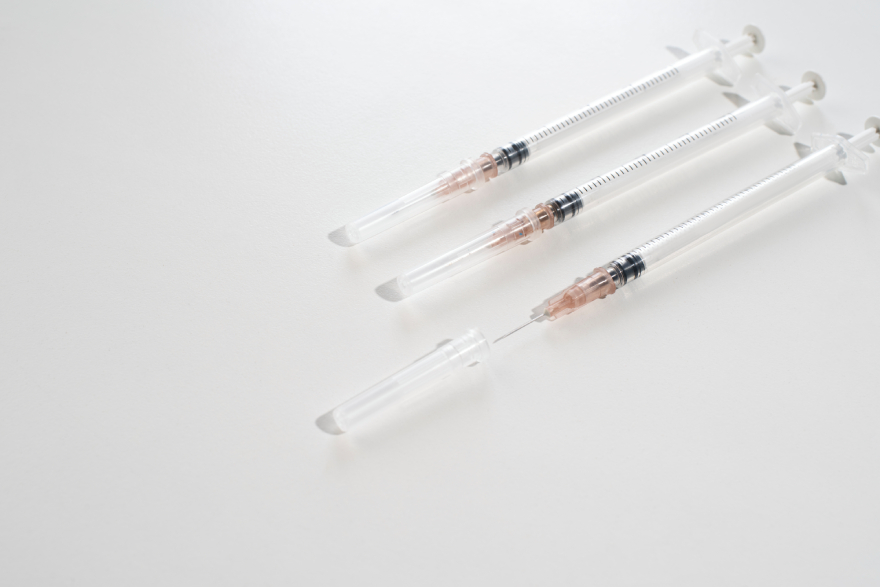
Now, what are the long-term risks of using retatrutide? Well - we don’t know. There isn't much long-term safety data, and it's possible that rare side effects haven't been found yet.
Furthermore, responses differ, just like with most metabolic supplements. Some people put up with it very well, while others have trouble with appetite suppression. This variability is one reason why it's hard to make blanket recommendations and why most of the data we have now comes from controlled settings.
Additionally, because retatrutide is still mostly thought of as a research peptide, there is an extra risk that comes from the quality of the product.
Away from clinical trials, purity may differ, and there’s always a chance of contamination. This isn't just true for retatrutide, obviously, but still, it's something to keep in mind.
It's helpful to know what is reta peptide on its own, but it’s even more useful to put it into context with other popular peptides.
Let’s do just that - see how reta compares with a few other popular compounds.
Both retatrutide and tirzepatide are meant to help with weight loss and improve metabolic health, but there is one big difference - tirzepatide is a dual agonist that works on both GLP-1 and GIP, while retatrutide is a triple agonist that works on GLP-1, GIP, and glucagon.
In other words, retatrutide is different because of that third pathway, glucagon.
Both peptides make you less hungry and help control blood sugar levels better. But, retatrutide may also directly boost energy use. This is why comparisons between retatrutide peptide and tirzepatide often look at how much weight people lose overall.

In clinical studies, retatrutide has demonstrated more significant average weight loss at elevated doses[6], presumably attributable to the additional metabolic factor. But this also comes with side effects that could be worse, so that’s worth keeping in mind.
Semaglutide is one of the most well-known compounds of its kind, being from a previous generation of peptides.
Semaglutide works only GLP-1, as opposed to retatrutide’s addition of GIP and glucagon. This makes semaglutide easier to understand, more studied, and more predictable, but then also less broad in scope.
Studies show that semaglutide causes significant weight loss[7]. Retatrutide is theorized to make those results even better (based on early data). There are benefits to simplicity, however - semaglutide comes with more reliable safety information, and more consistent rules for dosage.
Remember - you can track your peptide dosage on the Longeviters-approved MAX Peptide AI application. Check it out!
Cagrilintide is different. It doesn't target GLP-1 or glucagon pathways; instead, it acts like amylin, a hormone that plays a role in controlling your appetite and signaling satiety.
Retatrutide works on more than the metabolic system, but cagrilintide is exclusively focused on controlling hunger and how much food you eat.
Researchers are also looking into combination therapies, such as cagrilintide and semaglutide, which try to get multi-pathway effects by stacking instead of using just one molecule.

The retatrutide peptide, on the other hand, tries to get the same or better results in one compound. One way to look at it is like an evolution in peptides of a similar kind - it’s not a replacement for existing compounds, but instead, the “next step”, next generation of compounds that iterates and advances what’s currently available.
When you take a step back and look at what is reta peptide from a distance, you can see why it's getting so much attention in longevity circles: it's not just about losing weight, but also about slowing down the aging of your metabolism.
Metabolism is not a side issue in the study of longevity. It's one of the main systems that affects how quickly (or slowly) the body gets worn down over time.
More and more studies are showing that a few key markers are linked to long-term health outcomes, including:
These metrics are closely linked to the risk of heart disease, type-2 diabetes, and general age-related health decline.
Compounds like retatrutide indirectly affect pathways that are important to the biology of aging by improving a number of these at once. For instance, initial clinical data indicates significant enhancements in weight loss, blood sugar level control, and cardiometabolic indicators.
These changes don't automatically mean a longer life, but they do fit with things that are linked to healthier aging. Body composition, or the ratio of fat to lean mass, is one of the less well-known factors that affect how long you live.

Extra visceral fat works as an active endocrine organ that causes inflammation and interferes with hormone signaling. Retatrutide may help the body become more metabolically efficient by significantly lowering fat mass.
That's one reason why people often talk about it with lifestyle changes instead of as a separate solution.
People sometimes call these kinds of compounds a "metabolic reset." That's a good metaphor, but it needs more context.
What really happens is more detailed. The signals that tell you to eat are changed, there are changes in energy balance, and the retatrutide peptide helps your body maintain better control of blood sugar. The burning of fat goes up, as well.
But none of these changes will last forever on their own. What happens after treatment, such as diet, activity level, and long-term habits, has a big effect on them. This is where framing for longevity comes in: the goal is to make changes that last, and peptides, in general, act as a helpful tool instead of a replacement for things like physical exercise and a proper diet.

Lifestyle factors like those are much more important than any one compound, but they help explain why interest in peptides has grown along with other trends in longevity, such as sauna bathing or cold plunging.
It’s important to keep in mind that there is presently no direct evidence indicating that retatrutide prolongs human lifespan.
So, what is reta peptide when you really break it down?
In simple terms, it’s an experimental peptide that targets three hormone receptors. Researchers are looking into how it affects metabolism, body weight, and blood sugar levels. It works by affecting the GLP-1, GIP, and glucagon pathways at the same time.
But it's still important to keep things in perspective. Retatrutide is still being researched, and is not yet approved for general use by the FDA. There’s still a notable lack of understanding of the compound’s long-term effects.
The simplest way to think about it is this - the reta peptide is a promising step forward in the field of metabolic science, but there is still a lot of work to be done until it's generally available to be used by the public.
Thanks for reading, and remember to check out the MAX Peptide AI dosage + tracker app, as the best tool for all of your peptide usage-related needs!

 Verified
The term “reta peptide” refers to retatrutide, an experimental triple receptor agonist peptide that’s currently undergoing clinical trials and is being studied for its effects on weight loss and metabolic health.
Yes, retatrutide is a peptide - namely, a synthetic peptide designed to mimic and enhance hormone signaling involved in energy balance.
Reta peptide has been shown to reduce appetite, improve insulin sensitivity, and increase energy expenditure through multiple hormonal pathways. All of these effects are still currently being studied.
Reta peptide side effects most commonly include nausea, gastrointestinal discomfort, and appetite suppression, especially when you first start taking it / soon after increasing the dosage.
Retatrutide peptide dosage in research settings typically involves gradual, weekly dose escalation under clinical supervision. There aren’t any official numbers out there for “official” dosage to use the peptide on your own, since it’s not yet FDA-approved to be used for humans.
If you’re wondering where to buy retatrutide peptide, this is a complex question, because there really isn’t a designated place where you could get this peptide. Remember - it’s still not legally available to be used by humans, so the only way to actually get your hands on reta peptide (and be sure it’s that) is in a clinical trial setting.
Join 60,000+ longevity biohackers and get our 5-min weekly read with the latest findings, research-backed protocols and tips to boost your daily habbits!
Searching for results...
Please wait while we find the resultsNo results found for ""
Try searching for a different termSomething went wrong
Please try again later