












APP 50% OFF
Get Exclusive Discount





The use of experimental peptides for recovery and longevity has grown in popularity over the years - this has led to increased interest in BPC-157 for dogs, as well. Canine owners dealing with aging pets, stubborn injuries, and joint problems are starting to look at BPC-157 as a peptide that may help with all of those issues.
There is published research on the potential benefits of BPC-157 for dogs. There are also pre-clinical studies on the safety of BPC-157 in canines and other animals. What we don’t yet have, however, are established clinical trials showing that the peptide in question consistently treats arthritis, heals tendon injuries, reduces pain, or extends a dog’s lifespan.
In this article, we’ll dig into the topic a bit further. Obviously, none of what we’ll talk about should be viewed as an endorsement to give your dog BPC-157 - if you’re planning to do so, make sure to discuss the decision with your pet’s vet first.
BPC-157 is a synthetic peptide consisting of 15 amino acids. It was developed during research into compounds related to the protective activity of gastric tissue. The name itself means “Body Protection Compound 157”.
The BPC-157 we are researching is a laboratory-produced peptide - remember that. It’s often claimed to be a gastric protein, or a gastric protective compound, but that doesn’t mean humans (or dogs, for that matter) naturally have injectable BPC-157 just floating around in their bodies.
So, why has this specific peptide received so much attention? Well, pre-clinical studies have linked BPC-157 to several biological processes involved in the recovery of damaged tissue, including:
That unusually wide scope of research is why you will often see BPC-157 informally called a “healing peptide”. That’s also why the interest in BPC-157 for dogs tends to come from owners with pets that have orthopedic injuries, aging joints, digestive problems, or slow healing.
Another feature that made BPC-157 interesting to researchers was its relative stability in gastric juice. Peptides are normally rapidly degraded by digestive enzymes, but experimental studies have described BPC-157 as being unusually resistant to degradation in the stomach.
Most of the literature surrounding BPC-157 consists of animal experiments (rats, for the most part) rather than controlled veterinary or human clinical trials. A recent review of its development stated that after decades of pre-clinical investigation, BPC-157 still does not have an approved formulation or a validated clinical dosing regimen.
All of this is very significant if you’re considering the BPC-157 peptide for dogs.
A lot of the peptide chat online quickly turns from rat studies straight to what might happen in pets. However, there are at least two published pre-clinical studies on BPC-157 that directly included dogs - beagles in both, to be exact. One looked mainly at safety of the compound, the other at how the peptide behaves inside the body.
The first was a 2020 toxicology study where researchers tested BPC-157 in mice, rats, rabbits, and dogs with both single-dose and repeated-dose conditions[1].
In the canine group, the researchers noted that BPC-157 was generally tolerated well. Repeated dosing showed no big difference between the treated dogs and the control group. The only significant finding was a creatinine reduction at the highest reported dose, which was not seen at lower doses and which was reversible after stopping treatment. Mild local irritation was reported, too.

Of course, the study was designed to look for toxicity in the compound, not to see if BPC-157 could help a Labrador with arthritis, a greyhound with a tendon injury, or an older dog struggling with mobility. Nonetheless, the results are promising.
Then, in 2022, a separate study was published by researchers exploring the pharmacokinetics of BPC-157 in rats and beagles[2]. They wanted to know what happens to the compound once it gets into the body.
The dogs received BPC-157 intravenously or intramuscularly in different experimental doses. Researchers found that the peptide appeared in blood circulation rapidly and was also eliminated relatively quickly. Peak concentrations were attained generally within about 9 minutes after intramuscular administration.
Repeated administration over 7 days was also tested, but no significant difference was seen in overall exposure compared to a single administration of the same experimental dose, suggesting that the parent peptide was not accumulating in the bloodstream day after day under those study conditions.
Here's a quick overview of what science currently knows about BPC-157 for dogs:
| What Has Been Studied in Dogs | What We Know So Far |
|---|---|
| Direct exposure to BPC-157 | Yes |
| Short-term pharmacokinetics | Yes |
| Repeated experimental exposure | Yes |
| Preclinical toxicology | Yes |
| Clinical treatment of dog injuries | Not established |
| Canine arthritis outcomes | Not established |
| Long-term use in senior pets | Not established |
| Lifespan effects | Not established |
There is enough direct canine research to say that the BPC-157 peptide for dogs is not based purely on online anecdotes. Researchers have given the compound to dogs, measured it in their blood, watched how quickly it was cleared, and performed controlled toxicology work.
When it comes to clinical efficacy, however, this is where the evidence becomes much more scarce.
The interest in BPC-157 for dogs stems primarily from what researchers have seen in experimental models relating to injuries. BPC-157 doesn’t appear to work like a painkiller that just makes an injury feel better. Instead, it might be able to modulate some of the biological processes involved in repairing damaged tissue.
Once again, though, much of this evidence is based on rats and lab research, not on actual injured pet dogs.
Good blood supply is needed to repair damaged tissue. Oxygen, nutrients, immune cells, and materials needed to rebuild tissue have to somehow get to the location of the injury.
One of the proposed potential benefits for BPC-157 is angiogenesis, or simply - the formation and organization of blood vessels during healing.
In one study on injured muscle and tendon tissue in rats, BPC-157 was associated with more organized angiogenesis around healing tissue[3].
Interestingly, researchers didn’t see BPC-157 just making blood vessels grow indiscriminately. Its vascular effects appeared to become more relevant in the context of injured tissue, which is more interesting than simply calling it “an angiogenic peptide”.
This is probably the area of the BPC-157 peptide for dogs topic that has attracted the most interest among pet owners.
Tendons and ligaments heal notoriously slowly because they have a limited blood supply. Fibroblasts, the cells that produce and organize the extracellular matrix (the framework of connective tissue), are also key to their recovery.

BPC-157 has been shown in laboratory studies to stimulate tendon fibroblast migration and outgrowth[4], both of which are important in the repair process. Separate experiments in rats with surgically damaged ligaments showed that BPC-157 treatment improved functional, biomechanical, microscopic, and structural metrics[5].
That doesn’t mean the same thing would happen in a dog with a torn ligament, but it does explain why orthopedic recovery has become such a hot topic of discussion around the compound in question.
In rats with severe muscle injuries, BPC-157-treated rodents showed improvement in swelling, tissue appearance, biochemical markers, and functional recovery compared to their untreated counterparts.
Studies like that suggest BPC-157 may influence multiple phases of repair at the same time, not by one pathway alone. Here's a simplified version:
| Healing Process | What Research Suggests |
|---|---|
| Blood vessel response | May support VEGF-related vascular changes |
| Fibroblast activity | May increase migration around damaged tendon tissue |
| Collagen and matrix repair | Improved organization reported in animal models |
| Muscle recovery | Better structural and functional healing reported in rats |
| Ligament repair | Improved biomechanical and histological measures in rats |
BPC-157 is known to have the ability to affect tissue repair in a number of experimental animal models, and we know from other studies that dogs are able to absorb and metabolize the peptide. What the research hasn’t definitively tied together yet is whether those effects of healing would consistently happen in injured dogs that get the peptide treatment.
The research helps explain how BPC-157 might influence healing, but the important question for this article is where those effects could actually matter for dogs. Most of the interest currently centers on musculoskeletal injuries, arthritis, wound recovery, and gastrointestinal problems, although the quality of evidence differs quite a bit in all of these areas.
As I’ve mentioned earlier, the most common reason people investigate BPC-157 for dogs appears to be for musculoskeletal healing.
The strongest pre-clinical case for this is based on studies of tendons, ligaments, and skeletal muscle. As mentioned earlier, BPC-157 has been demonstrated to improve ligament healing, enhance biomechanical strength, and speed up tendon fibroblast migration in rat models, as well as promote stronger recovery after severe muscle injury.
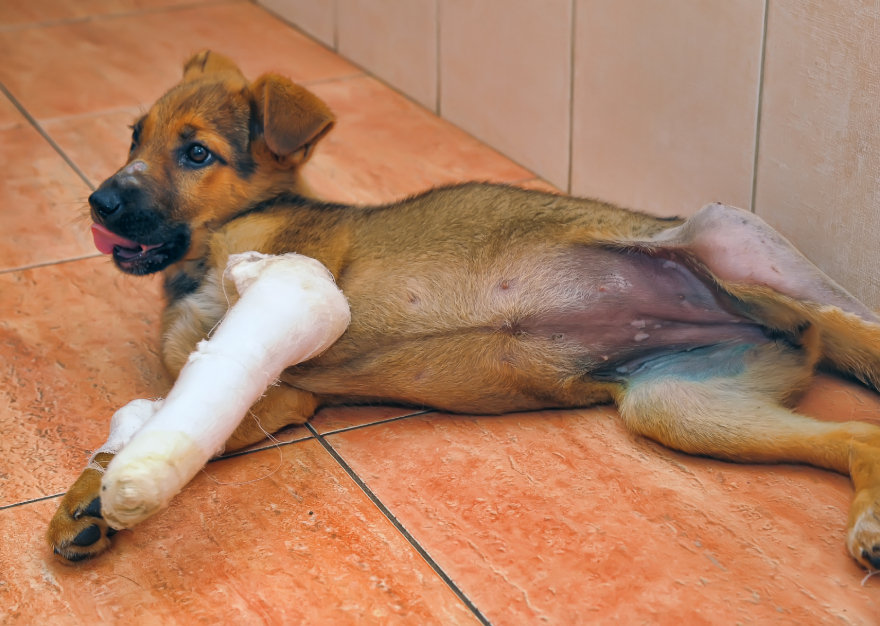
In one study, BPC-157 treatment improved structural and functional healing of ligaments[6]. Research has shown that the peptide stimulated tendon fibroblast migration and outgrowth, both of which are important processes in connective-tissue healing. Some studies of muscle injury have also reported improved tissue organization and functional recovery in treated animals[7].
But that’s frankly where the evidence ends. There are no good clinical trials showing that BPC-157 speeds the healing of tendons, ligaments, or muscles in injured dogs.
I’ve written an entire piece about peptides for dogs with arthritis - check it out, if that’s what you’re looking for!
As far as BPC-157 specifics go, this peptide is referenced mostly for its perceived effects on inflammation, connective tissue repair, and blood flow. Animal studies show positive findings in areas that surround an arthritic joint.
That said, canine osteoarthritis involves more than a single damaged tissue. It could include cartilage loss, inflammation, fibrosis, muscle weakness, and altered joint mechanics. That’s why claims that BPC-157 can just “fix” or “reverse” arthritis in dogs aren’t backed up by any current evidence.

There is also no strong clinical trial evidence that BPC-157 reduces pain and improves mobility in dogs with osteoarthritis. The rationale that exists is indirect, mostly based on research on musculoskeletal systems in general.
Thus, while BPC-157 for dogs with arthritis is an interesting topic of research, particularly since it may affect multiple tissues around the joint simultaneously, it’s still considered an experimental treatment in this case.
In animal studies, BPC-157 has been demonstrated to promote faster wound closure, more collagen deposition, and better blood vessel formation around damaged tissue[8]. Some experiments also indicated that the tensile strength of healing wounds was enhanced, suggesting that the restored tissue may even gain additional strength over time.
Wound healing involves several processes that must work together. Inflammation needs to be controlled, fibroblasts need to rebuild tissue, collagen needs to be organized properly, and new blood vessels need to support the damaged area.
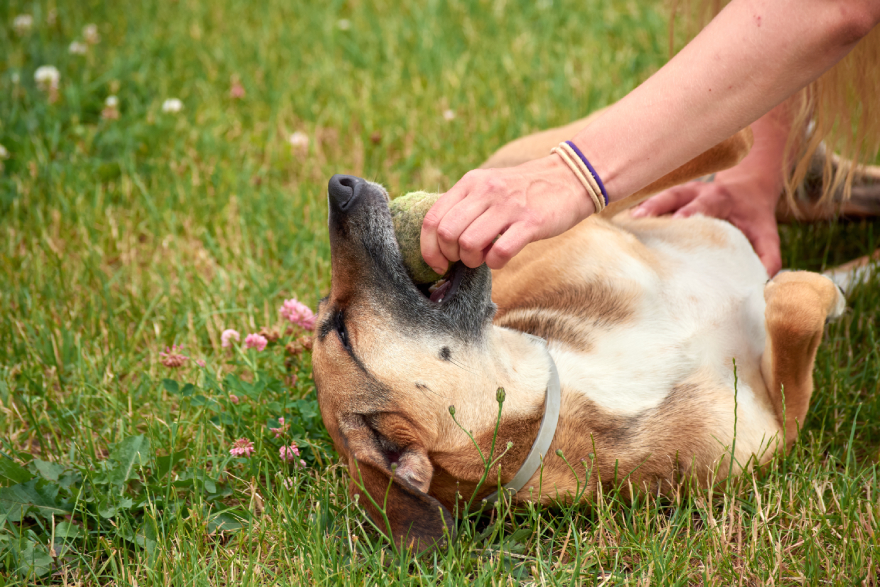
The research seems promising, but most of it is in rodent injury models, not in dogs recovering from surgery or traumatic wounds. Currently, there is no firm canine clinical evidence that BPC-157 can reduce surgery recovery time or improve healing outcomes in injured dogs.
So, the potential is largely based on the wider tissue-repair profile of the peptide. BPC-157 could be of potential utility in veterinary recovery settings, but it still needs to be demonstrated directly in dogs.
Gut health is a less obvious part of the discussion around BPC-157 for dogs, but as we’ve established at the beginning of the article, it’s actually central to the peptide’s research history.
Researchers have reported protective effects on the stomach lining, improved ulcer healing, and better repair of damaged intestinal tissue in animal models using BPC-157[9]. These findings have been linked with several processes we’ve already discussed earlier, including blood-vessel formation, collagen deposition, and tissue regeneration.

That makes BPC-157 potentially relevant to gastrointestinal injury and recovery, at least from a research perspective.
However, there is currently no strong clinical evidence showing that BPC-157 treats digestive disease in dogs, including ulcers, inflammatory bowel disease, or chronic gastrointestinal problems. There’s an interesting pre-clinical foundation, but as of yet - very limited real-world canine evidence.
It is rare that an older dog deteriorates due to one isolated problem. More often, a few different issues begin to pile up at once: arthritis, weaker muscles, past injuries, slower recovery, less balance, and a generally reduced desire to move.
Dog studies describe this slow decline of physical function as one of the primary effects of aging[10]. Loss of muscle strength, cardiovascular capacity, coordination, and mobility can all impact the level of independence an older dog has in their daily life.
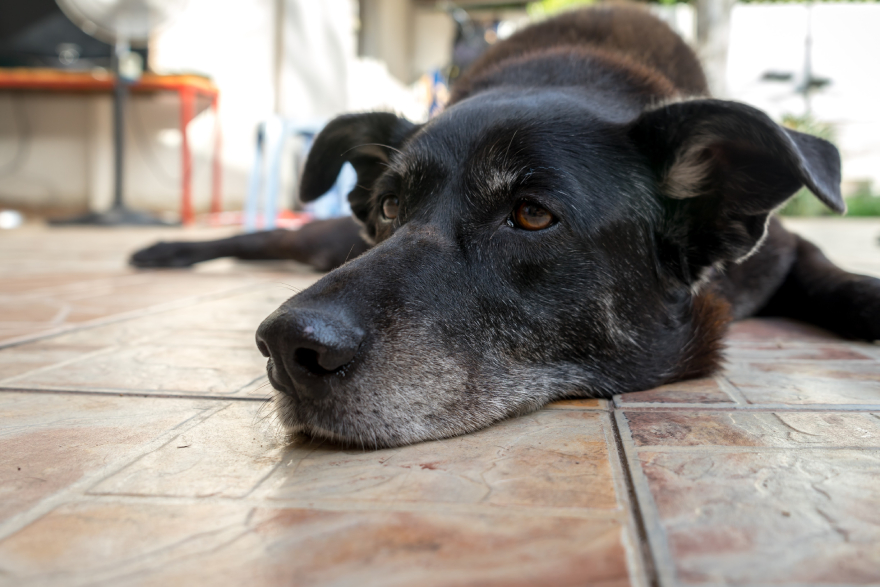
As you can imagine, when nothing else helps, dog owners start turning to experimental peptides such as BPC-157 for a potential solution.
BPC-157 hasn’t been shown to make dogs “live longer”. No good evidence for that exists, really. The compound is being studied more so for tissue repair, and how it might one day help support the kinds of physical issues that make old age harder.
Senior dogs often suffer from:
These issues don’t just exist in a vacuum; they compound. If a dog has sore joints, it may not be as active, and this can then lead to muscle loss. Weaker muscles can provide less support to already compromised joints, making movement even more difficult.
Modern veterinary research doesn’t regard osteoarthritis as simple cartilage wear. It’s considered a complex multi-joint disease, involving cartilage, bone, inflammation, fibrosis, and altered biomechanical changes.
Circling back, it's better to look at BPC-157 interest in terms of healthspan. If future trials in dogs showed that BPC-157 really helped with tissue recovery, joint function, or resilience after injury, that could possibly matter for how long an older dog stays active and comfortable.

Currently, there’s much more veterinary support for the use of established approaches, such as appropriate pain management, body-weight control, exercise, rehabilitation, and maintenance of muscle function, to preserve mobility in aging dogs.
With more people looking into the potential benefits of BPC-157 for dogs, however, things might shift sooner rather than later. At the same time, many dog owners choose to risk potential side effects if it means that their dog might have a chance to feel better, or experience less pain in old age.
There is limited safety data on BPC-157 for dogs. That being said, the situation is still more hopeful than many experimental peptides.
The main limitation is the lack of data, specifically. We still do not have good evidence on:
Recent FDA analysis of BPC-157 toxicology data also highlighted laboratory changes in dogs[11], including altered coagulation measurements and other blood chemistry findings at some experimental exposures. They weren't sufficient to prove major harm, but they show why broader safety research is still needed.
Then there’s the ever-present problem of product quality. A laboratory-grade peptide used in a controlled study isn’t necessarily comparable to a vial bought from an unknown online source.
So, the answer for now is unfortunately somewhat unsatisfying. BPC-157 does have some comforting short-term canine safety data, but there isn’t enough evidence to call it definitively safe for dogs. It is still an experimental compound, especially in terms of long-term use.
If I had to sum it up in a sentence, I’d say - BPC-157 for dogs is experimental, but promising. Scientists have looked into BPC-157 absorption and tolerance in dogs, and different animal research has linked the peptide with various potential benefits that it might produce.
So, the current bigger picture is rather simple. There is enough evidence to make BPC-157 worth studying further in veterinary medicine, but not enough to call it a proven treatment option. That said, it would seem that more and more dog owners are choosing to experiment with the compound.
Note that this article is in no way a recommendation to give your dog BPC-157 or any other experimental peptide. Discuss any treatment options with a vet first!

 Verified
BPC-157 is a synthetic amino acid peptide that is being studied for its potential tissue-protection and healing effects. The interest in BPC-157 for dogs is primarily centered on injuries, joints, trauma recovery, and gut health.
Yes, it has. Both pharmacokinetic and toxicology studies of BPC-157 have been performed on dogs. However, these studies mainly focused on the processing and tolerance of the peptide by the animals, and not on its efficacy for certain canine diseases.
It might, but there is currently no good clinical evidence that BPC-157 should be used to treat canine arthritis. The interest and speculation around the topic are mainly driven by preclinical research in inflammation and musculoskeletal tissue repair.
Animal research suggests BPC-157 may influence tendon, ligament, muscle, and wound healing. However, this has not yet been demonstrated convincingly in clinical trials involving injured dogs.
The existing short-term dog studies give reasonable reassurance that BPC-157 is safe to use for dogs, but this research is not sufficient to establish long-term safety. Concerns include long-term use, interactions with other meds, product purity, and possible side effects missed during the limited lab testing.
No, BPC-157 is not a recognized or approved veterinary medication for dogs. It is still an experimental peptide, so any discussion about using it for your pet should involve a veterinarian.
Join 60,000+ longevity biohackers and get our 5-min weekly read with the latest findings, research-backed protocols and tips to boost your daily habbits!
Searching for results...
Please wait while we find the resultsNo results found for ""
Try searching for a different termSomething went wrong
Please try again later